“Sticks
and stones may
break my bones, but words will never hurt me.”
That’s what we were told growing up. It wasn’t true.
Sometimes the words hurt — they last longer than anything physical ever could.
This page is a personal
account of what bullying can do to someone—not just in the
moment, but over time.
I know this is a LONG story, but of course it does cover over 50 years of time.
Please read it all the way to the end and at the end will be a link I feel if we do may change this forever!
This story takes place primarily during my years at Schaumburg High School SHS75 in the 1970s. But in many ways, this is not just a story about one school, one place, or one period of time.
Bullying like this existed then, and it still exists now in schools everywhere.
For far too long, it was often dismissed as “just part of growing up,” with little understanding of the lasting emotional and psychological impact it could have on someone long after the school years were over.
It’s an account from someone who lived through it, and what it was like on the receiving end of actions from others that may not have seemed like much at the time, but which added up to something far more lasting.
It’s also written with the hope that those who may have been on the other side of this experience might better understand what those experiences can feel like, and the impact they can carry long after the school years are over.
I’m sharing this now, many years later, not to place blame—but to offer an honest look at what bullying can do, and why it matters. And even a way that could possibly end it once and for all!
In E-Mail exchanges with a few people who admit they were once the ones doing the bullying, I learned something I didn’t expect at first.
Some of them carry it with them even decades later—real regret, real shame over things they said or did when they were younger.
A couple have even talked about trying to find the people they hurt, hoping to apologize, only to discover they couldn’t locate them anymore, or that those people may not want to be found.
Hearing that doesn’t undo what happened, and it doesn’t make things equal. But it does leave an uncomfortable truth sitting in the middle of all of it: what happened back then doesn’t simply stay back then.
These moments have a way of echoing forward quietly through people’s lives, long after the school hallways are gone.
And with that in mind, I want to return to where this really lives for me—what it was like from the inside, when it was happening.
All my life, I felt like that Eagles 1976 New Kid in Town song. I was always the "New Kid"
My dad worked for the government for most of my childhood. To this day, I still don’t really know what he did. What I did know was this: We were always moving.
Kindergarten and 1st grade were in one town.
2nd and 3rd in another.
4th brought yet another move, and then 5th.
After 5th grade, I started 6th—but only made it to November before we had to move again.
This time was different.
The house we were moving into wasn’t ready yet. The people living there wouldn’t be out until after the first of the year.
So instead of moving straight into another home, our family was split up.
My brother went to live with an uncle.
My sister stayed with an aunt.
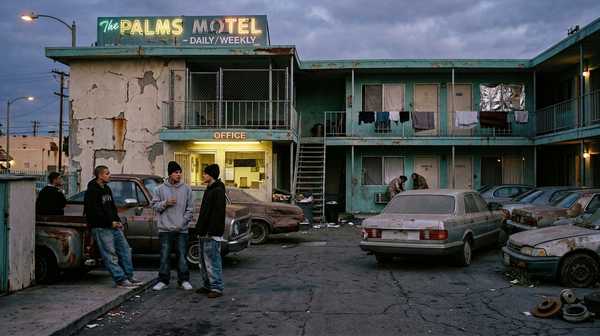 And my
parents and I moved into a cheap, run-down motel—the kind of
place meant more for people with nowhere else to go.
And my
parents and I moved into a cheap, run-down motel—the kind of
place meant more for people with nowhere else to go.
It wasn’t a place a 6th grader should have been living in.
The people staying there were a mix of gangs, drug users, and others who were just barely getting by.
The kind of people you might normally see out on the street—only here, they had a room.
Even though it was the middle of the school year, my parents decided it didn’t make sense to enroll me in yet another new school for just a couple of months.
So I didn’t go.
To me, it felt like an unexpected extension of summer.
This was the 1960s. My dad left for work each morning. My mom stayed in the room. And me? Like most kids back then, I was out on my own, exploring whatever I could find.
I found abandoned buildings. I wandered the area. I got into things most 6th graders probably shouldn’t have—especially alone.
And somehow… I was... Alone.
One thing most kids never had to think much about was making friends.
Most grew up with the same group of classmates year after year—people they had known for most of their lives.
Friendships just… happened.
That wasn’t my experience.
I was always the new kid. Every move meant starting over—new school, new faces, new everything.
Making friends was hard enough to begin with. And just when I did manage to make a few, it was time to move again.
It wasn’t just starting over—it was losing whatever I had just begun to build.
Most of the kids around me never had to experience that.
Thinking back, some of the best friends I ever had in my life were the ones I met at that motel.
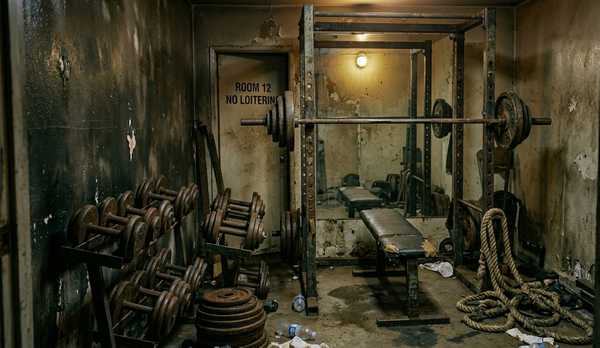 While
exploring, I found a room where some of the people staying there had
set up a makeshift weight room. It was just as worn-down and rough as
everything else—but it worked.
While
exploring, I found a room where some of the people staying there had
set up a makeshift weight room. It was just as worn-down and rough as
everything else—but it worked.
I missed working out. My brother had weights, and I helped out on my uncle’s farm, so I was used to being active.
Instead of wandering the streets all day, I started spending time in that room. Most days, it was empty. I figured everyone else was out doing whatever they did during the day.
Then one day, I was in there working out, and the door opened.
Six of the largest men I had ever seen walked in.
I froze.
They saw me and stopped. One of them, with a voice deeper than anything I had ever heard, said,
“Well… look what we got here. How you doing, little guy?”
I told them my name. Told them I was staying there with my parents. Told them I found the room and hoped it was okay for me to use it.
Then… silence.
The kind of silence where your mind starts going places you don’t want it to go.
I remember thinking—I might not be walking out of here.
And then… everything changed.
Smiles. Big ones.
“That’s great, little man,” one of them said. “You can use this place anytime you want.”
They even offered to help—show me better ways to work out, give me tips.
Those men—the ones who, at first glance, looked the most intimidating—turned out to be some of the kindest, most encouraging people I had ever met.
They never said a negative word to me. Not once.
Looking back, they may have been some of the best friends I ever had.
My days were spent in that weight room—working out, talking, learning.
For a while… it was actually a good time.
And then it was time to move again.
We moved into our house in Schaumburg.
And I started 6th grade at Campanelli Elementary..
Ok, my Dad takes me to school and gets me enrolled. I meet the principal, the counselors, and all the “people.”
By this point, it felt like I had done this a hundred times already.
Eventually the teacher comes in, we introduce ourselves, and then we head to the classroom. She does the usual:
“Class, we have a new student today. Let’s make him feel welcome.”
The first day went pretty much like it always did. Lots of questions:
“Where are you from?”
“Where do you live?”
“How long are you staying?”
Normal stuff.
Honestly, it wasn’t a bad day.
But then came the second day.
Since it was winter, P.E. class was inside the gym. Remember “Gym” class?
That day we were doing distance running — basically laps around the outside walls of the gym. For me, it was easy.
I ran a lot back then. I rode my bike constantly, even during winter. Hundreds, maybe over a thousand miles a year. And when I stayed at my uncle’s farm, I was always running around chasing animals, carrying things, climbing on equipment, or helping with chores.
So keeping up with the group wasn’t hard at all.
In fact, I moved right to the front of the pack almost immediately.
I could have easily outpaced everyone else, but I intentionally held back. One thing I had already learned from always being “the new kid” was this:
Don’t stand out if you can avoid it.
After gym class ended, the P.E. teacher pulled me aside while everyone else was heading back toward the classroom.
“I was watching you,” he said. “What’s up with you?”
I didn’t know what he meant.
“You weren’t even trying. You didn’t break a sweat. When everyone else stopped running, they were bent over breathing hard, and you were standing there like nothing happened. I don’t understand it.”
I told him the truth.
“This is honestly nothing for me. But please… PLEASE don’t make an example out of me or draw attention to me.”
He looked confused.
“I don’t get it,” he said. “You’re what… maybe 5 foot 5? A hundred pounds?”
He was close.
I was 5 foot 4 and weighed about 95 pounds.
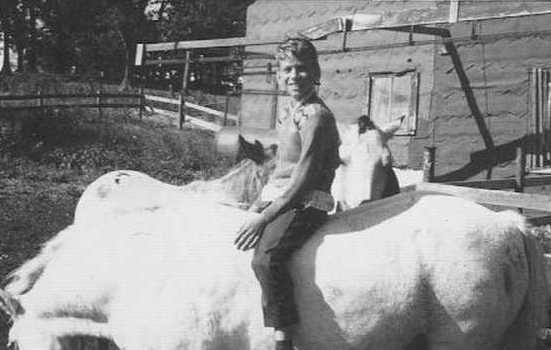
Yep. Just a skinny little kid.
Unfortunately, that conversation with the P.E. teacher didn’t go unnoticed.
Later in class, two of the biggest guys there came up to me asking what the teacher wanted. I brushed it off and told them he was just trying to get to know me a little better, same as everybody else had.
Then one of them asked what seemed like an innocent enough question:
“How much can you bench press?”
Before I could even answer, another guy threw out a number.
I honestly don’t remember exactly what it was anymore.
But because of the workouts with my brother’s weights, the makeshift gym at the motel, and all the work I did at my uncle’s farm, I answered honestly:
“Yeah… that’s not really much.”
And that was it.
That was the moment the bullying started.
They immediately started laughing.
Looking back, I probably weighed at least 50 pounds less than some of those guys. Skinny? Absolutely. Just look at me sitting on that horse. Nobody looking at me would have believed I could lift much of anything.
At first it was mostly verbal — comments, jokes, little digs.
But within a month it became physical.
And like bullying so often works, there was always a leader and then the followers behind him.
It was never one-on-one.
It was always a group.
I never really had a chance to defend myself.
Years later, a line from an old Bob Seger song would remind me of those days:
“And you always seem outnumbered… you don’t dare make a stand.”
The sad part is that when I answered their question about lifting weights, I was telling the truth.
But they had already decided I was full of it before ever giving me a chance to prove otherwise.
They didn’t know anything about my life outside school.
They didn’t know about working out with my brother’s weights.
Or the giant men at the motel who taught me how to train.
Or the work at my uncle’s farm.
And farm work is real work.

Every summer I helped with hay baling.
After the machine tied the bales, another tractor pulled a wagon slowly through the field.
Every time it came near a bale, you grabbed it and threw it up onto the wagon. And that wagon wasn't some low platform, the wagon was about four feet above the ground!
Each bale weighed around 75 to 85 pounds.
At the time, that was almost my entire body weight.
Now do that hundreds of times in the middle of summer heat.
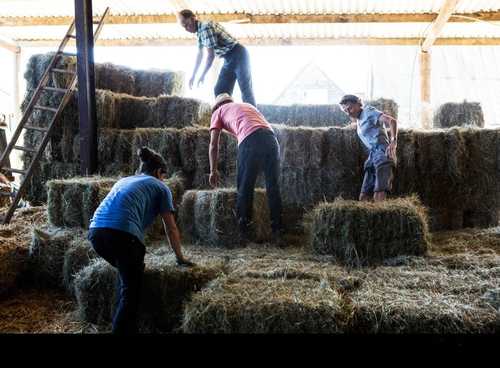 Then
once the wagon was full, you unloaded every bale into the barn and
stacked them as tightly as possible so no space was wasted.
Then
once the wagon was full, you unloaded every bale into the barn and
stacked them as tightly as possible so no space was wasted.
At first it wasn’t too bad.
But eventually the stacks grew higher and higher until they reached almost to the roof.
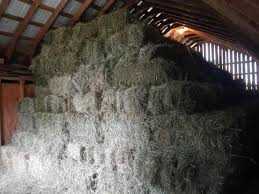 Now
you weren’t just lifting the bales — you were
carrying them up an ever-growing pyramid in unbearable heat.
Now
you weren’t just lifting the bales — you were
carrying them up an ever-growing pyramid in unbearable heat.
And barns in summer?
Imagine your attic on the hottest day of the year. 120, 130 140 degrees! yeah it is that hot!
Then make it worse. No breeze. Extreme humidity. Dust everywhere. That was one of my workouts.
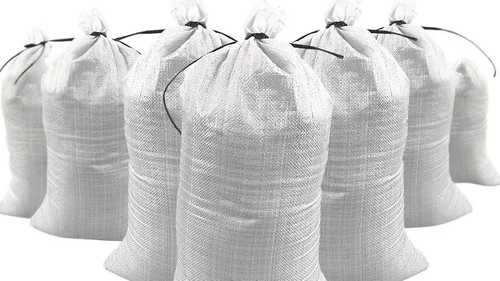
And when we weren’t making hay, I helped feed cattle. The feed came in 100-pound bags — literally more than I weighed myself.
I carried 20 to 25 of those bags twice a day, every day.
So while the kids at school saw a skinny little kid who looked harmless, appearances can be deceiving.
I may have looked like a toothpick, but physically I was much stronger than I appeared.
There’s a guy online now named Anatoly who became famous for exactly that kind of thing.
He looks like an ordinary skinny janitor, then walks into weightlifting gyms where huge muscular guys are training.
People laugh at him until he casually lifts weights they struggle to move themselves. Check out his video here.
That was basically me back then.
The difference was, I never really got the chance to prove it.
There was never just one bully. It was always several at once. No fair fight. No real opportunity to stand up for myself.
So the bullying continued.
And finally summer break arrived.
For a little while at least…
…it stopped.
Well, summer arrived… and it was awesome.
No bullying.
I worked out, helped on the farm, rode my bike constantly, and just stayed busy all the time.
It’s funny thinking about it now compared to today.
Back then, Dad went to work, Mom stayed home, and from sunrise until well after dark — sometimes past 10 PM — I was just… gone. Outside somewhere. My parents most times had no idea where I was or what I was doing.
Can you imagine that today?
And the bike riding?
Oh yeah… I rode that bike everywhere.
One day I decided to ride somewhere I had asked my Dad to take me many times, but he never did. So I figured: fine, I’ll go myself.
I rode my bike from Schaumburg all the way to the Yerkes Observatory in Wisconsin.
That was about a four- to five-hour ride each way.
I left around 8 in the morning, got there around 1 PM, stayed a couple hours, then finally made it home around 9 that night.
My parents never even knew I had left the state.
Different times.
I also played a lot of pickup sports games around the playgrounds and neighborhoods.
Baseball? I was terrible.
Football though? That was a blast.
I wasn’t especially fast, but I had what people today might call “power density.” If I played defense, I could power through almost anybody to get to the quarterback. If we were playing tackle football and I got the ball, I usually ended up dragging tacklers along behind me until several guys finally brought me down.
Flag football? Not so much. Couldn't out run them.
Real tackle football? I loved it.
Eventually summer started winding down, and now it was time for another new school experience:
Junior High.
The strange thing was, we were supposed to attend the brand-new Jane Addams Junior High School — except it wasn’t finished yet.
So instead, we shared Robert Frost Junior High School in a split-shift arrangement.
One group attended in the morning, the other in the afternoon. I honestly don’t remember which shift we had.
What’s strange is how little I remember about that entire period.
Almost nothing.
It’s like that part of my memory is just… blank.
Years later I looked it up online and discovered the split-shift schedule lasted until January of 1970, when Addams finally opened.
And what a shock that new school was to a 12- or 13-year-old kid.
Changing classes.
Different teachers for every subject.
Lockers.
Moving from room to room all day long.
It felt completely different from elementary school.
But the biggest shock of all?
P.E. class.
Not only did we suddenly have gym uniforms instead of regular clothes… but after class everybody showered.
Together.
Completely naked.
At first it was unbelievably awkward. There were probably two or three classes happening at once, meaning 60 to 90 junior high boys all running around trying to act like this was normal.
But honestly? After a few days, it just became part of school life.
Nobody thought much about it.
What amazes me now is seeing people online react with horror when they hear schools used to do this. Back then it wasn’t optional — if you didn’t shower after gym class, you could actually fail for the day.
Times really have changed.
Still, I adapted pretty quickly.
After all, by then I was practically a professional at being “the new kid.” Having to adapt to "New Things" Been there Done That!
One really fun thing about Addams being brand new was that our student body got to help decide things that would last forever — school colors, mascots, team names, mottos, traditions.
That part was actually exciting.
And thankfully, one of my biggest fears never really happened:
The serious bullying from Campanelli mostly didn’t return.
Part of the reason was simple — the main group of bullies and I rarely ended up in the same classes anymore. Usually I only saw them briefly while passing between classes in the hallways.
That alone changed everything.
Eventually coaches started announcing that school sports teams would soon be forming and invited anyone interested to try out.
Naturally, I immediately thought:
Football.
But it was January, so football season was long over.
Basketball? No thanks. I hated basketball.
That left wrestling.
And suddenly I was interested.
The coach held an informational meeting after school in the band room, and the moment they explained the weight-class system, I was hooked.
This was perfect.
Finally, I would compete against people my own size.
The first practices mostly involved watching films and learning basic moves. But after about a week, real practice finally began.
The coaches paired wrestlers by weight class, had everyone practice in front of the group, and walked us through techniques step by step.
By now I had grown a couple inches and gained weight over the summer, putting me into the 120-pound class.
Then came my turn.
The match started…
…and about 30 seconds later practice was over for the day.
Because I slammed my opponent to the mat with such force and accidentally broke his collarbone.
Oops.
A few days later the coach pulled me aside while I was working out.
“Okay,” he said laughing, “I need a favor from you. Practice hard. Win your matches. But only do what’s necessary to win. I can’t have you breaking all my wrestlers.”
So that’s what I did.
The coach even started using me to help train heavier weight classes, often matching me against guys 20 or 30 pounds bigger than me.
Honestly, I loved it.
Then finally came our first real match against another school.
Everything was going normally until late in the match. Between rounds my coach pulled me aside and said:
“You’re behind on points. You need a pin to win this.”
So I went all out.
About 15 seconds into the round, I took the guy down hard.
Then everybody heard it.
POP.
His shoulder dislocated.
The other coach argued, but the referee ruled it a completely legal move — just executed with a lot of force.
Winner: Addams.
The next school day felt surreal.
Teammates congratulated me. Students who probably didn’t even know my name the week before suddenly did.
For the first time in a long while, I felt noticed for something positive.
And honestly?
It felt really good.
But then something strange started happening.
At the next meet, right before my match, my coach suddenly forfeited my weight class and wouldn’t let me wrestle.
No explanation.
The next practice? Everything normal again.
Then the next meet happened…
…and the exact same thing.
Again no explanation.
Then at another meet, instead of forfeiting, the coach put in a backup wrestler from my class.
He lost badly.
I sat on the bench watching.
That was it for me.
I quit.
If I was good enough to help train the team, but not good enough to actually compete, then I was done.
Years later I started wondering if maybe the school had stepped in behind the scenes. After the broken collarbone and dislocated shoulder, maybe somebody decided I was too much of a liability.
I can’t prove that.
But it’s the only explanation that ever made sense to me.
And just like that, my brief time as a junior high sports “celebrity” quietly disappeared.
Not with some dramatic ending.
Just… faded away.
Still, the rest of my time at Addams really wasn’t too bad.
There was still some bullying now and then, but nothing even close to what things had been like back at Campanelli.
And before long, 8th grade graduation arrived.
Next stop:
Schaumburg High School.
Freshman year.
I wondered what changes were waiting there.
Well, school started, and thankfully Junior High had been a pretty good warm-up for High School.
In many ways, starting at Schaumburg High School felt similar to Addams.
Just… bigger.
Much bigger.
The building itself felt enormous, and it seemed like there were twice as many students moving through the hallways.
But there was another difference too.
A bad one.
The bullying crowd from Campanelli was suddenly back in my world again.
And not just a couple of them.
A lot of them.
What shocked me most was how quickly it all started back up, almost as if the two years at Addams had never happened at all. I honestly didn’t understand it. After all that time, why start it again?
But they did.
And just like before, most of it was verbal.
Probably 90% verbal and 10% physical.
People sometimes say:
“Sticks and stones may break my bones, but words will never hurt me.”
And honestly? If it had stayed 100% verbal, maybe that would have been true.
But the problem was that it never stayed completely verbal.
That other 10% changed everything.
Because once physical bullying becomes part of it, even the verbal stuff carries weight behind it. Every insult, every comment, every laugh comes with the knowledge that at any moment it could suddenly turn physical again.
And in High School, everybody was bigger now.
Stronger.
More aggressive.
And like before, it was never just one guy.
It was always a group.
One-on-one? Maybe I could have handled that.
But this wasn’t some movie where one guy takes on six people and walks away like Chuck Norris.
Real life doesn’t work that way.
And that left me constantly wondering:
How do I get these guys off my back?
That’s when I started thinking back to my brief time on the wrestling team at Addams.
For a short while there, I had experienced something completely different.
Respect.
Recognition.
For once, I wasn’t just “the new kid” or “the skinny kid” or the target.
For a little while, I was almost like one of the school athletes — one of the “important” kids.
And I started wondering:
Maybe football could do the same thing here.
As luck would have it, open football tryouts were happening in about a week.
YES.
Football.
Finally.
I was excited in a way I hadn’t been in a long time.
I could already picture the positions I wanted to try for:
Running back.
Slot receiver.
Fullback.
Or maybe defense:
Cornerback.
Strong safety.
Free safety.
I honestly believed this might change things.
Then tryout day arrived.
And that’s when reality hit me.
I showed up early because I was excited.
Too early.
No coaches were there yet — just students standing around waiting.
And among those students?
Yeah…
Several of the bullies.
Looking back now, I probably should have arrived late, after the coaches were already out there supervising everything.
But at the time, I wasn’t thinking about that.
I was thinking about football.
About finally getting a chance.
About maybe becoming part of something bigger than myself.
Instead, within minutes, the bullying started up again.
At first verbal.
Then physical.
And it escalated fast.
Eventually it got so bad that they literally ran me off.
I left scared.
Not necessarily scared for my life — but scared of getting seriously hurt.
Broken ribs maybe.
That kind of thing wasn’t unrealistic.
One of the common ways they would attack me was knocking me to the ground and kicking.
So I got out of there as fast as I could.
And just like that, football was over before it even began.
Looking back now, one thing still bothers me more than anything else:
I honestly wonder how many of them even knew why they were bullying me in the first place.
The original “offense” had happened almost four years earlier — when I answered honestly about how much weight I could bench press.
That was it.
That was the entire beginning of all of this.
And even then, the original issue had only involved one bully and maybe one or two other friends of his.
So why did everybody else join in?
Why did it spread?
Most of them never gave me any chance at all to show who I actually was or what I could offer the team.
They saw a skinny kid and decided the story before ever learning anything about me.
They never knew what I was capable of.
Never knew what I had done outside school.
Never knew I might actually have helped that football team.
Their loss.
At first, the bullying was something that happened during the school day.
But eventually something changed.
Even before anything happened, simply walking into the school building could trigger an overwhelming physical reaction. The moment I stepped inside, my body acted as though danger was already there whether it actually was or not.
My stomach would suddenly knot up, and I would need to get to a bathroom immediately.
Not later.
RIGHT NOW.
Nothing had even happened yet.
No bully had said a word.
Sometimes I hadn’t even seen anybody yet.
Just being inside the building was enough.
Looking back now, I realize my body had basically gone into constant alarm mode anytime I was in the school. It had learned to expect stress, fear, humiliation, or attack at any moment.
And that created a whole new problem.
A whole new group of bullies.
This probably sounds unbelievable to students today, but back then schools actually had designated student smoking areas.

There was an outdoor one near
the east parking lot outside the cafeteria, surrounded by old poles and
barriers so students could sit there without wandering into traffic.
And when the weather was bad, they even allowed smoking in a large back
stairwell inside the school that was rarely used otherwise.
But despite having official smoking areas…
 “Smokin’
in the Boys Room” was still very
much a thing.
“Smokin’
in the Boys Room” was still very
much a thing.
And that became a problem for me.
Every morning when I got to school, the first thing I would do was head for the nearest bathroom close to my first class and try to empty my system before the day really started.
The trouble was, those bathrooms were usually packed with students smoking. Cigarettes, marijuana, whatever they could sneak in. The rooms would be filled with smoke.
And many of them liked hanging around near the stalls. If a teacher or administrator suddenly walked in, they could quickly flush whatever they were hiding.
Which meant I was often occupying one of “their” stalls.
And eventually they noticed that I was in there every single morning.
“God damn it, he’s in there AGAIN!”
“What the hell is wrong with you?”
“Every day?!”
They would pound on the stall door while yelling at me.
Sometimes it stopped there.
Sometimes it didn’t.
Once in a while somebody would get so angry that they would actually force the stall door open, grab me, and drag me out with my pants around my ankles into the open area near the sinks so they could take over the stall themselves.
Then, standing there humiliated in front of everybody, I would have to try to clean myself up with paper towels, pull my clothes back together, and get out of there as fast as possible.
So now every morning became its own cycle of fear.
Fear of running into the bullies.
Fear of not making it to the bathroom in time.
Fear of what might happen once I was trapped inside one of those stalls.
It’s strange looking back now and realizing how quickly school stopped being a place for learning and instead became a place where your body and mind stayed on constant alert from the moment you walked through the doors.
Well, time marches on, and this simply became my life for the foreseeable future.
It was now May. Only another month or so until summer break.
Just thinking about that felt like relief.
Then one day in class — honestly, I don’t even remember which class it was — they announced it was time to choose our schedules for next year.
At first I thought:
Cool.
You actually got to help choose your classes and arrange your day.
But because by now I was constantly aware of my surroundings and always thinking ahead, something else immediately caught my attention:
How attendance worked.
I had noticed something during freshman year that probably 99% of students completely forgot five minutes later.
But my brain never forgot things like that.
The required credit classes — P.E., math, science, history, English, things like that — all had official attendance lists. Teachers had printed rosters and called attendance directly from them.
But the non-credit periods?
Study hall.
Lunch.
Independent study.
Those were different.
In study hall, for example, the teacher often didn’t have an official roster. Instead, once everyone arrived, a sheet of paper would get passed around and students simply wrote down their own names.
That became the attendance record.
And suddenly I started thinking.
Really thinking.
So when I built my schedule, I intentionally stacked all four required attendance classes first:
P.E.
Math.
Science.
History.
Then I filled the remaining periods with things like study hall, lunch, independent study, and other loosely monitored periods.
About a week later I got notified that my requested schedule had been approved.
Perfect.
At the time, nobody could possibly have known why I designed it that way.
But I did.
Finally June arrived, school ended, and once again I was FREE for the summer.
No hallways.
No bathrooms.
No constant tension.
Just freedom.
So life went back to workouts, farm work, and of course endless bike riding.
A LOT of bike riding.
One day I decided to ride my bike to Woodfield Mall, which had opened the previous September and was the largest shopping mall in the world at the time.

I had to see that for myself.
And really, six miles away? That was nothing.
Once I got there, I spent forever trying to find a bike rack. Apparently there weren’t any, so I finally chained my bike to a light pole near one of the entrances and hoped security wouldn’t cut it loose.
Inside, the place felt unbelievable.
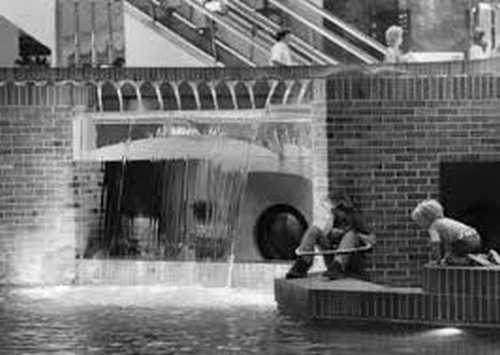 Huge
open spaces.
Huge
open spaces.
Massive crowds.
Even an indoor pond and waterfall.
You could actually walk underneath the waterfall and look into the water at these strange-looking fish.
For a while, it honestly felt exciting.
Then I heard a voice.
One I hadn’t heard for weeks.
Yeah. Him.
My main tormentor from Campanelli.
And of course he wasn’t alone.
The entire atmosphere changed instantly.
The bullying started again immediately, like no time had passed at all.
Then suddenly they actually picked me up and threw me into the pond near the waterfall before running off laughing.
And somehow, to make the whole thing even more humiliating, mall security ended up angry at ME for being in the water.
That wasn’t the only time I ran into those guys over the summer either.
Eventually I started avoiding public places almost entirely.
Parks.
Stores.
Anywhere open to the public.
If I absolutely had to go somewhere, like a store even, I went in, did what I needed to do, and left as quickly as possible.
No more wandering around places for fun.
No more relaxing in public.
My world was slowly getting smaller and smaller. I was starting to get stressed out just leaving my house.
No-where else seemed safe anymore.
Then sophomore year started, and it was finally time to test my schedule idea.
P.E. first.
Then the other required attendance classes.
After fourth period?
I simply disappeared.
Sometimes I went to the library.
Sometimes the cafeteria.
Sometimes I just wandered around quietly waiting for the day to end.
The strange thing was… as expected in my "Plan"
Nobody noticed.
The second day came.
Nothing.
No note.
No questions.
No calls.
By the end of the first week, I realized nobody seemed to know — or care — that I wasn’t attending any periods five through eight.
Then came the real test.
The following week, after fourth period ended, I simply walked out the front doors of the school and went home.
That was it.
Nobody stopped me.
Nobody questioned me.
Nobody even seemed aware I was gone.
And once I realized it worked, I continued doing it for the rest of my time at SHS. Sophomore, Junior, and Senior years.
As strange as it sounds now, it helped the bullying situation enormously.
Those first four classes were heavily supervised, so physical bullying almost completely disappeared during them. Even verbal bullying dropped way down because nobody could openly harass me while a teacher stood nearby.
After that, I was gone. Not even in the Building. "Elvis Has left The Building"!
The only remaining danger points were between classes in the hallways…
…and the bathrooms.
Well, time marched on, and this simply became my life for the foreseeable future.
Nothing really changed.
Same shit every day. (Pun intended.)
Oddly enough though… I actually did end up finding one place in school where I had fun.
Yeah.
Fun.
At SCHOOL.
And of all places…
P.E. class.
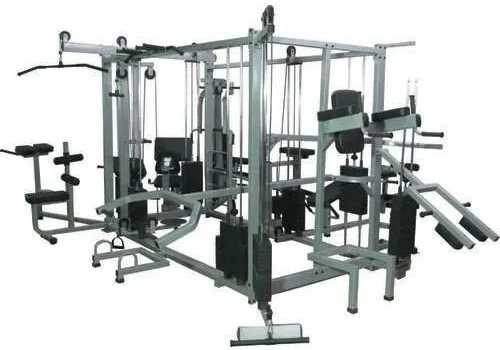
Off in one corner of the gym sat this big universal weight machine.
It had everything on it — cables, pulldowns, pull-up bars, benches, stacks of weights.
But my favorite station was the leg press.
You sat in this chair-like setup with your feet against two large plates and pushed the weight outward with your legs.
Needless to say…
I was very good at that.
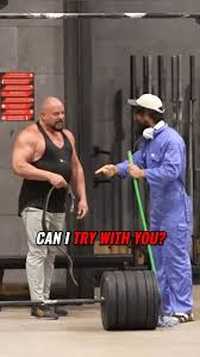 And
without realizing it at the time, I had basically started doing an
“Anatoly” routine over fifty years before Anatoly
became famous online for doing the exact same thing. Remember Anatoly
from earlier in this story.
And
without realizing it at the time, I had basically started doing an
“Anatoly” routine over fifty years before Anatoly
became famous online for doing the exact same thing. Remember Anatoly
from earlier in this story.
In School the big athletic jocks would be over there working out hard, grunting through their reps, and I would quietly wander over and just stand nearby watching.
Usually I hung around the leg press.
Eventually one of them would look over and ask sarcastically:
“What do YOU want?”
And just like Anatoly, I’d act all shy and awkward and quietly say:
“I’d kinda like to try it…”
Of course everybody would laugh.
That was exactly what I expected. Just like the big guys with Anatoly.
Eventually the guy using the machine would agree, mostly because he thought it would be hilarious watching this skinny little nobody embarrass himself in front of everyone.
Usually they’d even call other people over to watch.
I’d sit down and ask what the machine was set at, even though I already knew because I had been watching the whole time.
Then I’d stand back up, act unsure, walk over to the weight stack…
…and casually move it to 400 pounds.
The expressions on their faces were priceless.
Most of them immediately started laughing harder.
Then I’d sit down, position my feet…
…and crank out five reps.
Not easily.
But cleanly.
Suddenly the entire room would go silent.
I’d calmly stand up and say:
“Thanks guys.”
Then walk away.
The best part was what happened afterward.
From around the corner I would secretly watch them trying to duplicate what I had just done.
Most couldn’t move it at all.
A few managed maybe one rep while practically turning purple.
And honestly?
That felt REALLY good.
Eventually curiosity got the better of me, so one day when nobody was around I checked the machine’s maximum weight setting.
I honestly don’t remember what the max was anymore.
But I do remember testing it…
…and finding out I could do two reps with the machine completely maxed out.
Now things got interesting.
The next time I pulled the “Anatoly” routine, I first matched whatever weight the guy had been struggling with. Then came the shy little laugh, the move to 400 pounds, the five reps…
…and afterward I’d casually ask:
“You want me to try more?”
Of course they did. I'd say set it to what you want me to try.
They of course would immediately max the machine out.
Then I’d look nervous and say something like:
“Wow… that looks dangerous. I could get hurt trying that.”
Pause.
“So… how much money you willing to bet I can't do two reps?”
And just like that, the betting started.
Sometimes there were enough guys standing around that over a hundred dollars would end up pooled together.
Then I’d sit down.
ONE.
TWO.
Thank you very much.
Eventually word spread too much and I ran out of people who didn’t already know about me and my capabilities.
BUT,,,, Hmmmm...? I have 4 periods that are mine to do anything I want to with.
So that Friday, everyone is supposed to take their GYM Uniform home over the weekend and get it washed. it stinks bad actually.
So it was nothing unusual to see me leave P.E. with the uniform.
My school day is over, I go to the nearest bathroom to the weight machine, and wait for everyone to leave.
The period had started. I changed into the GYM uniform and put my street clothes in a bag, and headed to the weight machine.
It's 5th period now. No one knows me. I sit my back against the wall, watching.
When the time seems right, I start up "Anatoly" all over again. And with total success!
I eventually expand "Anatoly" to all four of those periods. Eventually I run out of people that did not know of my capabilities.
So the money train gets de-railed. But by the time it ran out of gas, I probably made close to $2000.00!
What was sad though… really sad… was this:
Not a single one of those guys ever asked me if I wanted to join their team.
Not football.
Not wrestling.
Not track.
Nothing.
They saw what I could do.
Over and over again.
And it still never crossed their minds.
Even the P.E. teachers — many of whom were coaches themselves — never really asked who I was or why this skinny quiet kid is even in their class could suddenly outdo half the athletes in the room. They never even came over wondering who I was. Because i was for sure not a part of that class. But not a single question.
Nobody seemed curious enough to care.
Eventually the school year finally came to an end and summer break arrived again.
And honestly, it was wonderful.
By now I had learned how to survive.
I avoided malls.
Stores.
Parks.
Anywhere crowds gathered.
If I absolutely had to go somewhere public, I timed it carefully, got in, got out, and left as quickly as possible.
And somehow, through luck or timing, I managed to avoid running into “those people” all summer long.
So once again my world became simple:
Weight workouts.
Helping on the farm.
Riding Bike.
Well, now it was the start of junior year.
And honestly?
Nothing had really changed.
Well… almost nothing.
The bullying was still happening almost daily. Same people. Same threats. Same fear.
Life just kept repeating itself over and over.
There were still moments of humor though.
New students arrived every year, which meant new opportunities for “Anatoly.”
Freshmen especially were easy targets. How many people remember being approached by upperclassmen trying to sell them fake elevator passes so they could use the elevator and avoid climbing stairs all year?
Yeah… high school.
By now we were about two months into the school year, and I had already done my little “Anatoly” act with plenty of new people.
But while all of that stayed mostly the same…
I was changing.
And not in a good way.
The constant fear was still there.
The digestive problems were still there.
But now something new had started happening.
Today, looking back, I know that if symptoms like this continue long after the traumatic events stop, people would probably call it Post-traumatic stress disorder. "PTSD"
But what do you call it when the stress, trauma, and fear aren’t in the past?
When they’re happening RIGHT NOW?
Because by this point, my body had started developing entirely new reactions to the constant stress.
Not only was I terrified all the time…
Now, whenever the tension or threats got bad enough, I would start trembling.
Not a little shaking.
Full body trembling.

Like when you see a dog that’s so frightened it physically vibrates because its nervous system is overloaded.
That was happening to me now.
A bully would start verbally threatening me in class, and suddenly my hands, arms, and body would begin shaking uncontrollably.
And the worst part was…
I couldn’t stop it.
Just like that terrified dog can’t simply decide to stop trembling, neither could I.
And this created a whole new problem.
The digestive issues were at least somewhat hidden away inside bathroom stalls.
The fear itself existed mostly inside my head.
But the shaking?
Everybody could see that.
And once the bullies noticed it, it became entertainment for them.
Almost like a game.
How fast could they make me start shaking?
How little did they have to say before my body reacted?
And all of this happened right there in classrooms where everyone else could see it too.
But strangely enough…
For the first time in years, there was at least a tiny crack of light through all the storm clouds.
One teacher noticed.
She saw me shaking badly during class and came over asking if I was okay. Maybe she thought I was having some kind of seizure.
I barely answered, but she immediately went to get another teacher, who then took me to the school nurse.
The nurse checked all the usual things — blood pressure, pulse, breathing.
Everything was elevated.
Way elevated.
But unlike most adults up to that point…
She was kind.
Calm.
She asked me what was going on.
And for the very first time, I finally told someone about the bullying.
Once I started talking, she stopped me and said:
“We need someone else to hear this too.”
Soon the vice principal and the school counselor were sitting there with us, and I basically poured everything out the same way I’m doing here now.
All of them assured me they would stop it.
Then they asked for names.
I didn’t want to do it.
I told them exactly why.
“You’ve heard the saying ‘Snitches get stitches,’ right?”
Because I knew if I gave them names, and those people found out, things would become far worse than they already were.
They promised me that wouldn’t happen.
So finally, after all those years, I took a chance.
I trusted them.
And I gave them one name.
The main guy from Campanelli.
The one who had started everything years earlier.
 And
exactly what I feared would happen…
And
exactly what I feared would happen…
Happened.
He found out.
And he was furious.
The bullying didn’t stop.
It exploded.
The attacks doubled. Maybe tripled.
And what made it even worse was that apparently he told many of the others that I had “snitched” on him.
Now they were angry too.
Things got so bad that eventually I started skipping school entirely.
At first it was maybe one day every few weeks.
Then one day every other week.
Then once a week.
By the end of junior year, I was lucky if I even attended school three days a week.
Sometimes only two.
And then finally…
Summer break arrived again.
And for a little while at least… Things should be better...
Well, summer ended, and senior year began.
Honestly, the summer itself had been no different from the one before it.
Farm work.
Weights.
Bike riding.
Avoiding public places whenever possible.
So we’ll skip ahead.
Senior year.
At first, things actually didn’t seem too bad.
Maybe what happened the previous year had sunk in over the summer. Maybe getting called into offices and risking consequences had finally taken some of the fun out of it for them.
For a little while, things felt quieter.
Not good.
But quieter.
Of course…
that didn’t last.
Whatever fear they had of consequences slowly faded, and before long the bullying started creeping back in again.
To this day, I still don’t completely understand why.
Really!
It had been what — six years since the original “crime” of claiming I could bench press a certain amount of weight?
Six years.
And yet somehow the target on my back never seemed to disappear.
But by now something else had changed.
My mind and body weren’t recovering between episodes anymore.
The stress wasn’t resetting.
It was accumulating.
Stacking on top of itself day after day, month after month, year after year.
And now a new symptom started appearing.
Heart palpitations.
At least, that’s the only word I later learned that came close to describing what it felt like.
Normally, your heartbeat just quietly exists in the background of life.
You don’t notice it.
But suddenly I became intensely aware of mine.
Sometimes it would feel like my heart was racing, pounding, fluttering, or beating so hard that I could feel it everywhere — chest, throat, neck.
And these episodes didn’t happen in isolation.
They weren’t random.
The trembling would already be happening.
The fear would already be there.
The stress would already be building.
Then suddenly…
my heart would explode into motion.
At rest, I had a very low heart rate — around the mid-40s — probably from constantly biking, working on the farm, and lifting weights.
But during these episodes it felt like everything went completely haywire.
My heart would suddenly race so violently it felt like it was trying to outrun my own body.
Fast.
Scary fast.
The feeling was hard to describe except to say it felt like pure panic colliding with physical exhaustion all at once.
Then came the terrifying part.
The pounding would suddenly stop.
And in those moments there would be this crushing sensation in my chest — heavy, frightening, like something had gone horribly wrong.
Time slowed down.
Seconds stretched.
The room would begin spinning.
I would start feeling like I might black out.
And then, eventually, my heartbeat would settle again.
Slow.
Heavy.
Violent enough that I could physically see movement in my chest.
Each beat felt oversized.
Like my body had gone through something it wasn’t supposed to go through.
Sometimes it would take half an hour before things finally calmed back down.
And if I managed to get away from whatever stress triggered it, eventually things settled.
But if the harassment kept going?
The cycle could begin all over again.
The shaking.
The stomach issues.
The racing heart.
The fear.
My senior year, it felt less and less like I was simply being bullied…
…and more like my entire body had begun living in survival mode.
At first, all of these reactions belonged to school.
The trembling.
The stomach problems.
The constant fear.
The racing heart.
School was where danger lived.
Or at least that’s what I thought.
But somewhere along the way, something changed again.
The symptoms stopped waiting for school.
Now, simply leaving my house could trigger them.
Nothing had happened.
No bully had appeared.
No threat existed in front of me.
I could be doing something completely ordinary — walking outside, heading to a store, getting on my bike, going somewhere I actually wanted to go — and suddenly my stomach would tighten, my chest would feel strange, the nervous trembling would start creeping in.
Not always as intense as school.
But enough.
Enough to remind me that something inside me had changed.
Looking back now, it feels like my body had stopped asking:
“Am I safe right now?”
And instead had switched to:
“What if something happens?”
Because by then, after years of never knowing when humiliation, threats, or violence might suddenly appear, danger no longer felt connected to one building.
It felt possible everywhere.
And slowly, without even realizing it at first, my world started getting smaller.
I avoided places.
Avoided crowds.
Avoided situations where I might run into people.
I started planning life around risk.
Not because I wanted to.
Because fear had become automatic.
My brain had changed so much by this point that, as I mentioned earlier, simply leaving the house could trigger symptoms.
It wasn’t just school anymore.
School was still the worst of it, sure. But now, even stepping outside my front door could start things rolling.
The trembling.
The fear.
And most of all, the digestive issue.
It had spread into everyday life.
Back in earlier years, riding the bus to school had been no big deal. Now? There is no way I could have done it.
Luckily, I had my driver’s license by then. At least that gave me some control.
But why would the bus have become impossible?
Because by this point my brain had become conditioned to expect danger anytime I left home. Even when I was alone. Even when nobody was threatening me.
The biggest issue, outside school, was the digestive one.
School wasn’t far from my house, but in my mind I had mapped out what I can only describe as “safe spots.”
A dozen of them, at least.
You may wonder what I mean by a safe spot.
A safe spot was anywhere I could stop immediately if I suddenly needed a bathroom — and when I say suddenly, I mean RIGHT NOW.
A gas station.
A store with a public restroom.
A business lobby.
Even a patch of woods or a cluster of bushes if absolutely necessary.
I knew them all.
Every route became a calculation.
Where can I stop if something happens?
How far am I from the next place?
Can I make it?
That was my reality.
And, of course, this became a major problem with school attendance.
By now I was missing more and more days.
At first it had been once in a while.
Then once a week.
Then several.
Eventually I was missing a lot of school.
And this is where things took another turn.
The school stepped in.
Looking back, this part still bothers me deeply, because in many ways it felt like the institution itself became another source of pressure.
The message was simple:
Make him come to school, or the truant officer gets involved.
Illinois law allowed absences for illness, and my parents called me in. But after enough missed days, the school stopped seeing it as illness and started seeing it as truancy.
The implication became clear:
If my parents continued letting me stay home, they could be treated as enabling truancy.
In other words — the pressure shifted to them.
The threat hung there.
Fine.
Jail.
Court.
My parents were scared.
And so the school demanded action.
I was required to begin seeing a psychologist — twice a week.
Tuesday and Thursday.
And one detail still sticks with me all these years later:
Even though I could drive myself, my father was required to bring me.
So twice a week, he had to leave work and take me.
Why? I still don’t fully understand.
To this day, They say smells and Music, can transport people to a time long ago.
And it does for me, Click on the button here,
(Clicking a second time will stop it if you don't want to hear the whole song)
But every time I hear that song it takes me back to the headshrinks waiting room, because it seemed like every time I was there, in that waiting room, that song played again.
UG! I hated that song eventually. And- like I said anytime I hear that song 50+ years later I'm back there sitting in that room!
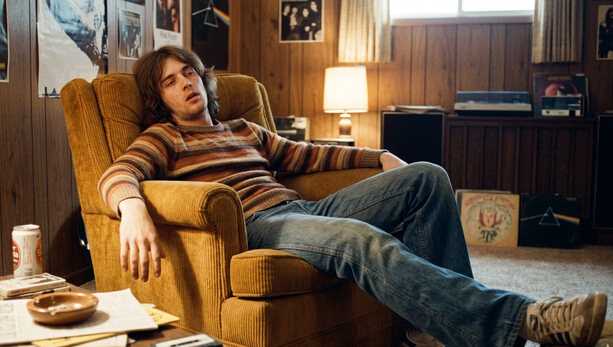 The whole thing lasted about six months.
All kinds of Drugs were tried, legal prescription ones, and well not legal ones.
And the only ones that gave me any relief from the symptoms
made me like the poor chap to the left here.
Stoned out of his brain.
But it was totally clear that they did not help with the problem.
And the strangest part?
Everyone already knew what was causing the problems I had, and it was simple and right in front of everyone!
The bullying.
That was it.
There was no mystery diagnosis to uncover.
No hidden secret.
No puzzle to solve.
The doctor figured it out quickly.
In fact, he became furious about what was happening.
Eventually he wrote a letter to the school.
The message, as I remember it, was essentially this:
We know what is causing the problem. Continuing to threaten the family over attendance while ignoring the years of bullying is unacceptable.
And if legal action continues, perhaps the school should be prepared to explain its own role.
After all, schools had a responsibility to keep students reasonably safe while under their care.
The bullying had been reported.
Meetings had happened.
Concerns had been raised.
Yet somehow, year after year, nothing meaningful changed.
The threat toward my parents stopped.
Almost overnight.
No more warnings.
No more truancy pressure.
No more legal threats.
And looking back now, I sometimes wonder if the school suddenly realized something uncomfortable:
If this ever did end up in front of a judge, they might not like the questions they would be asked.
My final time in school was no different.
Even after all the meetings, warnings, and promises that something would be done about the bullying, nothing really changed. I could tell they had talked to at least some of them again. But there were never any real consequences behind the warnings. And every time someone got talked to, the result was the same:
They came back angrier.
The bullying didn’t stop.
It escalated.
By now I was missing more school than I was attending. It was May. Graduation was only weeks away for everyone else, but I already knew how this story was going to end.
Because of all the missed days and missing credits, I wasn’t going to graduate.
The message was simple: I would have to come back and do another year.
A fifth year.
Another year of fear.
Another year of humiliation.
Another year of constantly waiting for the next attack.
No.
I told my parents:
Forget this. I’m done.
Maybe someday I’d go back and get a GED. But there was no way I was going to relive this nightmare for another year.
So a few days later, my time at school officially ended.
I was out.
I was free.
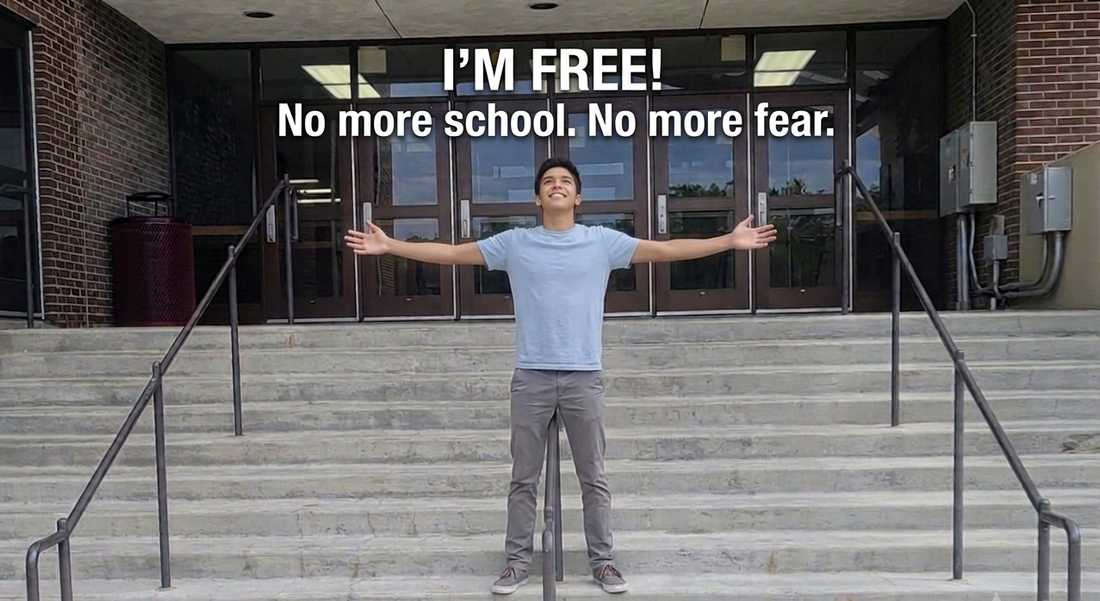
For the first time in years, I thought maybe life could finally begin.
No more hallways.
No more bathrooms filled with fear.
No more watching over my shoulder every second.
In my mind, life outside school looked beautiful.
Blue skies. Sunshine. Freedom.
Happy people.
Laughter.
Birds in the air.
Kites flying.
A world finally opening up.

But that world never arrived.
Because what school had done to me didn’t stay at school. It followed me out of the school.
The bullying stopped.
The damage didn’t.
The shaking.
The digestive problems.
The fear.
The heart episodes.
The constant sense that something bad could happen at any moment.
Worst of all, I no longer needed to be inside school for it to happen.
By now, simply leaving the house could trigger it.
No bully present.
No threat happening.
Just walking out the front door and my body reacted as if danger was already waiting.
And there was always another fear in the back of my mind:
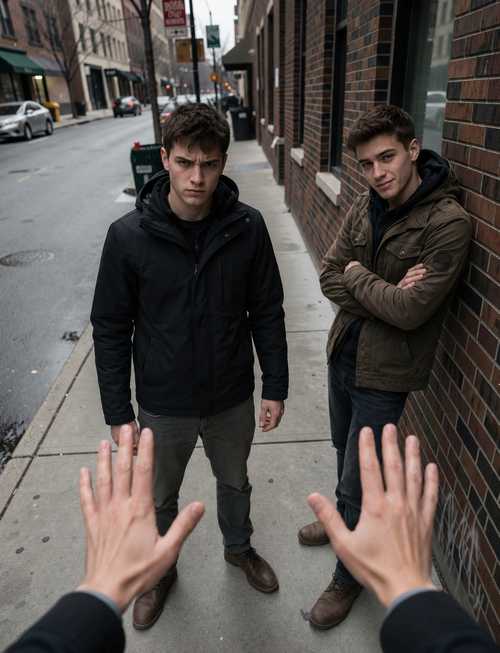
What if I ran into one of them?
At the grocery store.
At the mall.
Walking down the street.
My prison had changed locations.
School was gone.
But I was still trapped.
The safe place had become home, and the world outside it felt dangerous.
Luckily, I could work from home helping with the family business.
That mattered more than anyone probably realized at the time.
Because leaving the house for normal life?
That felt nearly impossible.
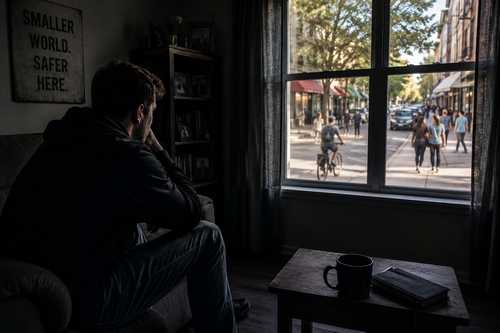 Little
by little, my world became smaller.
Little
by little, my world became smaller.
I worked from home.
Avoided public places whenever possible.
Built routines around “safe spots,” escape plans, and minimizing risk.
Stores became something to get through quickly.
Parks stopped being relaxing.
Going somewhere “just because” slowly disappeared.
The world outside kept moving.
But mine got smaller and smaller.
Still, after a few years, something started bothering me.
I wanted to finish high school.
Not go back—but finish it.
So I started looking into getting my GED.
That’s when I discovered another problem.
Back then, at least in my area, getting a GED wasn’t simply a matter of signing up and taking the tests.
There were mandatory orientation sessions.
Assessments.
Placement testing.
Preparation classes.
Counseling.
Remediation if they thought you needed it.
In other words: lots of classes.
And classes were exactly what I could not do.
I kept telling them:
I don’t need the classes. Just let me take the tests. I’ll pay for them. Let me prove it.
The answer was always no.
For about a year, I fought that battle.
Then one day my dad said:
“Call this guy.”
He gave me a name and phone number.
Apparently Dad knew people.
A few calls later, something unbelievable happened:
I got permission to take all five GED exams in a single sitting.
YES.
Then reality hit:
How am I actually going to do this?
The biggest issue, to put it politely, was still the digestive problem.
And to show you just how powerful this fear had become, here is what I was willing to do:
I somehow managed to get the same kind of preparation drink people use before a colonoscopy.
The nuclear option.
The stuff that completely empties everything out.
And wow… does that stuff work.
Test day arrived.
I still had the shaking.
I still had some heart symptoms.
The anxiety was definitely there.
But at least one fear had been removed.
I sat down and took all five tests back-to-back. I wanted this over with. No dragging it out.
And just like I knew all along—
I never needed the classes.
I passed all five.
Average score: 98%.
After everything school had convinced me I couldn’t do…
That felt pretty damn good.
I went home happy.
Passing the GED felt like a BIG win.
And in many ways, it was.
After everything—the missed school, the fear, the years of being told in one way or another that I wasn’t functioning normally—I had proven something important to myself:
My brain still worked just fine.
Actually, pretty damn well.
But passing the GED didn’t magically fix what had happened to me.
The bullying had ended.
School was gone.
Yet the damage followed me into adult life.
By this point, the fear had become bigger than school.
Simply leaving the house could trigger symptoms.
The shaking.
The digestive problems.
The racing heart.
The constant feeling that something bad might happen.
So I adapted.
I worked from home.
Avoided public places whenever possible.
Built routines around “safe spots,” escape plans, and minimizing risk.
Little by little, my world became smaller.
And that shrinking world created a problem I never saw coming.
Because eventually life throws things at you that fear doesn’t cancel.
Sometimes your body breaks.
Sometimes you get sick.
And sooner or later, that means going somewhere that feels impossible.
Like a doctor’s office.
That became a problem.
A very serious one.
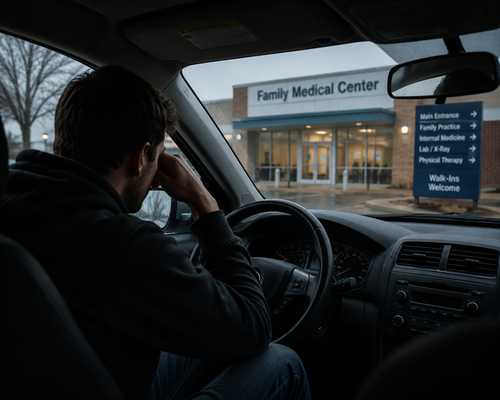 Because
even getting there didn’t mean I could actually go inside.
Because
even getting there didn’t mean I could actually go inside.
Sometimes the hardest part wasn’t the doctor.
It was the parking lot.
Sitting there. Looking at the door.
Knowing I needed help, while every alarm system in my brain screamed NO.
The fear made no logical sense anymore.
I knew nobody inside was going to hurt me.
Yet my body reacted like danger was waiting on the other side of that door.
Because when a real medical problem appeared, I didn’t seek help.
Not for weeks.
Not for months.
For more than two years.
And the damage from that—more accurately, the damage from what fear had turned my life into—is something I still live with more than forty years later.
At first, it didn’t seem like much.
I figured maybe I had overdone it.
Too much yard work.
Too much lifting.
Maybe I pushed too hard during workouts.
I was still lifting weights, after all.
But my knees and ankles hurt.
Not terrible.
Just enough to notice.
Enough to think:
“Huh… something feels off.”
Days passed.
Nothing improved.
Weeks passed.
Still there.
And slowly—very slowly—it started getting worse.
Pain spread into my hips, knees, and ankles.
At first it was annoying.
Then uncomfortable.
Then painful.
But the progression was so unbelievably slow that I kept adapting to it, convincing myself it would pass.
A year later?
Still happening.
Only worse.
The swelling had started.
Walking hurt.
Standing hurt.
Everything hurt.
Months passed.
Now I spent most of my time sitting or lying down because walking had become exhausting and painful.
Then came the swelling.
My ankles became enormous.
The skin stretched so tight it honestly felt like it might split open.
I’d lie in bed or sit in the recliner and think:
Do I really need to get up right now?
Can it wait?
Because even something as simple as walking to the bathroom hurt so badly it became a decision.
Eventually, things became impossible to ignore.
By the two-year mark, I could barely walk at all.
Sometimes I was literally crawling through the house.
And even crawling hurt because of the pressure on my knees.
The pain had become overwhelming.
Finally, neighbors helped get me into the back of a pickup truck and drove me to the emergency room.
After test after test came the answer:
Late-stage disseminated Lyme arthritis.
An extreme case.
The level of infection and inflammation was described to me as essentially “off the charts.”
And suddenly everything made sense.
The swelling.
The pain.
The gradual collapse.
The doctors explained two things.
First: treatment would take time.
A long time.
This disease had been active in my body for years.
Second: even if they stopped the Lyme disease, some of the damage was already done.
I was given medications to fight the infection and pain medicine strong enough to actually help.
And over time, the infection itself improved.
But the damage remained.
Tests and imaging later showed severe destruction in the joints—especially my hips, knees, and ankles.
Large amounts of cartilage were gone.
Too much bone grinding against bone.
Damage that doesn’t simply grow back.
The kind of thing that leaves a permanent mark.
Joint replacements could someday help.
But because of everything that had happened to me psychologically—because leaving home, doctors, hospitals, procedures, all of it had become its own battle—that path never felt simple or realistic. And never will happen.
So the consequences stayed.
And decades later, I’m still living with them. The results of all the Bullying that stopped me from something as simple as going to a doctor!
The Cost Didn’t End at School
There are two more stories to tell here.
One happened in a matter of hours.
The other unfolded slowly over decades.
Let’s start with the fast one.
About twenty years ago, I was simply mowing the yard when suddenly—out of nowhere—the most intense pain I had ever felt hit me.
I couldn’t breathe.
My chest felt like it was collapsing inward.
Then… nothing.
The next thing I remember was waking up in an emergency room hooked to what felt like a thousand wires and machines.
They told me I had suffered a heart attack and wanted to move quickly into further treatment. Surgery!
And that’s where the real damage from fear showed itself again.
Because the problem wasn’t only what had happened to my heart.
The problem was me.
Or more accurately, what years of fear had trained me to become.
Hospitals.
Doctors.
Being trapped somewhere unfamiliar.
Being vulnerable.
Everything in me screamed NO.
So I disconnected myself, got dressed, walked out, and never returned for follow-up care.
That probably sounds unbelievable to some people.
But fear doesn’t always look logical from the outside.
When your brain has spent years learning that leaving safety equals danger, you stop making decisions based only on reason.
You make them based on survival.
And then there’s the slower story.
One almost everyone can understand.
A toothache.
You know that pain.
The throbbing.
The ache that seems to pulse through your whole head.
Now imagine having that pain… and doing nothing.
Days pass.
Weeks.
Eventually it settles down.
Then months later, it comes back.
Again.
And again.
Until one day the tooth finally gives up and falls apart.
Now imagine repeating that cycle not once—
but over and over for decades. Thirty two times!
Eventually losing every tooth.
Not because you didn’t care.
Not because you were lazy.
But because fear had become stronger than common sense.
Fear had become stronger than pain.
Stronger than logic.
Stronger than self-preservation.
People sometimes ask how something that started in school could still matter decades later.
This is how.
The bullying ended.
The consequences didn’t. I still suffer just as much now as 50 years ago.
And bullying is still here today.
In some ways, it may even be worse now, with online harassment following kids home through phones and social media.
Researchers and school violence studies have found that many young people involved in serious acts of school violence experienced long periods of bullying, humiliation, rejection, isolation, or unresolved grievance. Bullying alone does not explain why tragedies happen—but untreated fear, hopelessness, humiliation, and isolation matter. A lot. Those experiences leave marks. Some visible. Some invisible.
I know this because I lived part of that world.
Not the violence.
But the fear.
The helplessness.
The feeling of becoming smaller and smaller while the world around you feels more dangerous.
And after living with this for over fifty years, I believe there are things schools could do differently.
If you’ve read this far, then maybe you’re asking the same question I eventually asked myself:
How do we stop something like this from happening to the next kid?
What happened to me can’t be changed. But maybe what happens to the next kid can.
I spent a long time thinking about that question and eventually came to an idea — one built not around punishment for the offender, but accountability, responsibility, and giving students a real role in solving the problem. Learn what it is like in the real world, how things will be after leaving school.
Click HERE to see a proposal for a student-run school justice system that might help stop bullying before it becomes a lifetime memory.
Things that might help stop bullying earlier—and maybe prevent some of the damage that follows.
If this story meant something to you, or reminds you of someone who might need to hear it, please consider sharing it.

I know this is a LONG story, but of course it does cover over 50 years of time.
Please read it all the way to the end and at the end will be a link I feel if we do may change this forever!
This story takes place primarily during my years at Schaumburg High School SHS75 in the 1970s. But in many ways, this is not just a story about one school, one place, or one period of time.
Bullying like this existed then, and it still exists now in schools everywhere.
For far too long, it was often dismissed as “just part of growing up,” with little understanding of the lasting emotional and psychological impact it could have on someone long after the school years were over.
It’s an account from someone who lived through it, and what it was like on the receiving end of actions from others that may not have seemed like much at the time, but which added up to something far more lasting.
It’s also written with the hope that those who may have been on the other side of this experience might better understand what those experiences can feel like, and the impact they can carry long after the school years are over.
I’m sharing this now, many years later, not to place blame—but to offer an honest look at what bullying can do, and why it matters. And even a way that could possibly end it once and for all!
In E-Mail exchanges with a few people who admit they were once the ones doing the bullying, I learned something I didn’t expect at first.
Some of them carry it with them even decades later—real regret, real shame over things they said or did when they were younger.
A couple have even talked about trying to find the people they hurt, hoping to apologize, only to discover they couldn’t locate them anymore, or that those people may not want to be found.
Hearing that doesn’t undo what happened, and it doesn’t make things equal. But it does leave an uncomfortable truth sitting in the middle of all of it: what happened back then doesn’t simply stay back then.
These moments have a way of echoing forward quietly through people’s lives, long after the school hallways are gone.
And with that in mind, I want to return to where this really lives for me—what it was like from the inside, when it was happening.
All my life, I felt like that Eagles 1976 New Kid in Town song. I was always the "New Kid"
My dad worked for the government for most of my childhood. To this day, I still don’t really know what he did. What I did know was this: We were always moving.
Kindergarten and 1st grade were in one town.
2nd and 3rd in another.
4th brought yet another move, and then 5th.
After 5th grade, I started 6th—but only made it to November before we had to move again.
This time was different.
The house we were moving into wasn’t ready yet. The people living there wouldn’t be out until after the first of the year.
So instead of moving straight into another home, our family was split up.
My brother went to live with an uncle.
My sister stayed with an aunt.
And my
parents and I moved into a cheap, run-down motel—the kind of
place meant more for people with nowhere else to go.It wasn’t a place a 6th grader should have been living in.
The people staying there were a mix of gangs, drug users, and others who were just barely getting by.
The kind of people you might normally see out on the street—only here, they had a room.
Even though it was the middle of the school year, my parents decided it didn’t make sense to enroll me in yet another new school for just a couple of months.
So I didn’t go.
To me, it felt like an unexpected extension of summer.
This was the 1960s. My dad left for work each morning. My mom stayed in the room. And me? Like most kids back then, I was out on my own, exploring whatever I could find.
I found abandoned buildings. I wandered the area. I got into things most 6th graders probably shouldn’t have—especially alone.
And somehow… I was... Alone.
One thing most kids never had to think much about was making friends.
Most grew up with the same group of classmates year after year—people they had known for most of their lives.
Friendships just… happened.
That wasn’t my experience.
I was always the new kid. Every move meant starting over—new school, new faces, new everything.
Making friends was hard enough to begin with. And just when I did manage to make a few, it was time to move again.
It wasn’t just starting over—it was losing whatever I had just begun to build.
Most of the kids around me never had to experience that.
Thinking back, some of the best friends I ever had in my life were the ones I met at that motel.
While
exploring, I found a room where some of the people staying there had
set up a makeshift weight room. It was just as worn-down and rough as
everything else—but it worked.I missed working out. My brother had weights, and I helped out on my uncle’s farm, so I was used to being active.
Instead of wandering the streets all day, I started spending time in that room. Most days, it was empty. I figured everyone else was out doing whatever they did during the day.
Then one day, I was in there working out, and the door opened.
Six of the largest men I had ever seen walked in.
I froze.
They saw me and stopped. One of them, with a voice deeper than anything I had ever heard, said,
“Well… look what we got here. How you doing, little guy?”
I told them my name. Told them I was staying there with my parents. Told them I found the room and hoped it was okay for me to use it.
Then… silence.
The kind of silence where your mind starts going places you don’t want it to go.
I remember thinking—I might not be walking out of here.
And then… everything changed.
Smiles. Big ones.
“That’s great, little man,” one of them said. “You can use this place anytime you want.”
They even offered to help—show me better ways to work out, give me tips.
Those men—the ones who, at first glance, looked the most intimidating—turned out to be some of the kindest, most encouraging people I had ever met.
They never said a negative word to me. Not once.
Looking back, they may have been some of the best friends I ever had.
My days were spent in that weight room—working out, talking, learning.
For a while… it was actually a good time.
And then it was time to move again.
We moved into our house in Schaumburg.
And I started 6th grade at Campanelli Elementary..
Ok, my Dad takes me to school and gets me enrolled. I meet the principal, the counselors, and all the “people.”
By this point, it felt like I had done this a hundred times already.
Eventually the teacher comes in, we introduce ourselves, and then we head to the classroom. She does the usual:
“Class, we have a new student today. Let’s make him feel welcome.”
The first day went pretty much like it always did. Lots of questions:
“Where are you from?”
“Where do you live?”
“How long are you staying?”
Normal stuff.
Honestly, it wasn’t a bad day.
But then came the second day.
Since it was winter, P.E. class was inside the gym. Remember “Gym” class?
That day we were doing distance running — basically laps around the outside walls of the gym. For me, it was easy.
I ran a lot back then. I rode my bike constantly, even during winter. Hundreds, maybe over a thousand miles a year. And when I stayed at my uncle’s farm, I was always running around chasing animals, carrying things, climbing on equipment, or helping with chores.
So keeping up with the group wasn’t hard at all.
In fact, I moved right to the front of the pack almost immediately.
I could have easily outpaced everyone else, but I intentionally held back. One thing I had already learned from always being “the new kid” was this:
Don’t stand out if you can avoid it.
After gym class ended, the P.E. teacher pulled me aside while everyone else was heading back toward the classroom.
“I was watching you,” he said. “What’s up with you?”
I didn’t know what he meant.
“You weren’t even trying. You didn’t break a sweat. When everyone else stopped running, they were bent over breathing hard, and you were standing there like nothing happened. I don’t understand it.”
I told him the truth.
“This is honestly nothing for me. But please… PLEASE don’t make an example out of me or draw attention to me.”
He looked confused.
“I don’t get it,” he said. “You’re what… maybe 5 foot 5? A hundred pounds?”
He was close.
I was 5 foot 4 and weighed about 95 pounds.
Yep. Just a skinny little kid.
Unfortunately, that conversation with the P.E. teacher didn’t go unnoticed.
Later in class, two of the biggest guys there came up to me asking what the teacher wanted. I brushed it off and told them he was just trying to get to know me a little better, same as everybody else had.
Then one of them asked what seemed like an innocent enough question:
“How much can you bench press?”
Before I could even answer, another guy threw out a number.
I honestly don’t remember exactly what it was anymore.
But because of the workouts with my brother’s weights, the makeshift gym at the motel, and all the work I did at my uncle’s farm, I answered honestly:
“Yeah… that’s not really much.”
And that was it.
That was the moment the bullying started.
They immediately started laughing.
Looking back, I probably weighed at least 50 pounds less than some of those guys. Skinny? Absolutely. Just look at me sitting on that horse. Nobody looking at me would have believed I could lift much of anything.
At first it was mostly verbal — comments, jokes, little digs.
But within a month it became physical.
And like bullying so often works, there was always a leader and then the followers behind him.
It was never one-on-one.
It was always a group.
I never really had a chance to defend myself.
Years later, a line from an old Bob Seger song would remind me of those days:
“And you always seem outnumbered… you don’t dare make a stand.”
The sad part is that when I answered their question about lifting weights, I was telling the truth.
But they had already decided I was full of it before ever giving me a chance to prove otherwise.
They didn’t know anything about my life outside school.
They didn’t know about working out with my brother’s weights.
Or the giant men at the motel who taught me how to train.
Or the work at my uncle’s farm.
And farm work is real work.
Every summer I helped with hay baling.
After the machine tied the bales, another tractor pulled a wagon slowly through the field.
Every time it came near a bale, you grabbed it and threw it up onto the wagon. And that wagon wasn't some low platform, the wagon was about four feet above the ground!
Each bale weighed around 75 to 85 pounds.
At the time, that was almost my entire body weight.
Now do that hundreds of times in the middle of summer heat.
Then
once the wagon was full, you unloaded every bale into the barn and
stacked them as tightly as possible so no space was wasted.At first it wasn’t too bad.
But eventually the stacks grew higher and higher until they reached almost to the roof.
Now
you weren’t just lifting the bales — you were
carrying them up an ever-growing pyramid in unbearable heat.And barns in summer?
Imagine your attic on the hottest day of the year. 120, 130 140 degrees! yeah it is that hot!
Then make it worse. No breeze. Extreme humidity. Dust everywhere. That was one of my workouts.
And when we weren’t making hay, I helped feed cattle. The feed came in 100-pound bags — literally more than I weighed myself.
I carried 20 to 25 of those bags twice a day, every day.
So while the kids at school saw a skinny little kid who looked harmless, appearances can be deceiving.
I may have looked like a toothpick, but physically I was much stronger than I appeared.
There’s a guy online now named Anatoly who became famous for exactly that kind of thing.
He looks like an ordinary skinny janitor, then walks into weightlifting gyms where huge muscular guys are training.
People laugh at him until he casually lifts weights they struggle to move themselves. Check out his video here.
That was basically me back then.
The difference was, I never really got the chance to prove it.
There was never just one bully. It was always several at once. No fair fight. No real opportunity to stand up for myself.
So the bullying continued.
And finally summer break arrived.
For a little while at least…
…it stopped.
Well, summer arrived… and it was awesome.
No bullying.
I worked out, helped on the farm, rode my bike constantly, and just stayed busy all the time.
It’s funny thinking about it now compared to today.
Back then, Dad went to work, Mom stayed home, and from sunrise until well after dark — sometimes past 10 PM — I was just… gone. Outside somewhere. My parents most times had no idea where I was or what I was doing.
Can you imagine that today?
And the bike riding?
Oh yeah… I rode that bike everywhere.
One day I decided to ride somewhere I had asked my Dad to take me many times, but he never did. So I figured: fine, I’ll go myself.
I rode my bike from Schaumburg all the way to the Yerkes Observatory in Wisconsin.
That was about a four- to five-hour ride each way.
I left around 8 in the morning, got there around 1 PM, stayed a couple hours, then finally made it home around 9 that night.
My parents never even knew I had left the state.
Different times.
I also played a lot of pickup sports games around the playgrounds and neighborhoods.
Baseball? I was terrible.
Football though? That was a blast.
I wasn’t especially fast, but I had what people today might call “power density.” If I played defense, I could power through almost anybody to get to the quarterback. If we were playing tackle football and I got the ball, I usually ended up dragging tacklers along behind me until several guys finally brought me down.
Flag football? Not so much. Couldn't out run them.
Real tackle football? I loved it.
Eventually summer started winding down, and now it was time for another new school experience:
Junior High.
The strange thing was, we were supposed to attend the brand-new Jane Addams Junior High School — except it wasn’t finished yet.
So instead, we shared Robert Frost Junior High School in a split-shift arrangement.
One group attended in the morning, the other in the afternoon. I honestly don’t remember which shift we had.
What’s strange is how little I remember about that entire period.
Almost nothing.
It’s like that part of my memory is just… blank.
Years later I looked it up online and discovered the split-shift schedule lasted until January of 1970, when Addams finally opened.
And what a shock that new school was to a 12- or 13-year-old kid.
Changing classes.
Different teachers for every subject.
Lockers.
Moving from room to room all day long.
It felt completely different from elementary school.
But the biggest shock of all?
P.E. class.
Not only did we suddenly have gym uniforms instead of regular clothes… but after class everybody showered.
Together.
Completely naked.
At first it was unbelievably awkward. There were probably two or three classes happening at once, meaning 60 to 90 junior high boys all running around trying to act like this was normal.
But honestly? After a few days, it just became part of school life.
Nobody thought much about it.
What amazes me now is seeing people online react with horror when they hear schools used to do this. Back then it wasn’t optional — if you didn’t shower after gym class, you could actually fail for the day.
Times really have changed.
Still, I adapted pretty quickly.
After all, by then I was practically a professional at being “the new kid.” Having to adapt to "New Things" Been there Done That!
One really fun thing about Addams being brand new was that our student body got to help decide things that would last forever — school colors, mascots, team names, mottos, traditions.
That part was actually exciting.
And thankfully, one of my biggest fears never really happened:
The serious bullying from Campanelli mostly didn’t return.
Part of the reason was simple — the main group of bullies and I rarely ended up in the same classes anymore. Usually I only saw them briefly while passing between classes in the hallways.
That alone changed everything.
Eventually coaches started announcing that school sports teams would soon be forming and invited anyone interested to try out.
Naturally, I immediately thought:
Football.
But it was January, so football season was long over.
Basketball? No thanks. I hated basketball.
That left wrestling.
And suddenly I was interested.
The coach held an informational meeting after school in the band room, and the moment they explained the weight-class system, I was hooked.
This was perfect.
Finally, I would compete against people my own size.
The first practices mostly involved watching films and learning basic moves. But after about a week, real practice finally began.
The coaches paired wrestlers by weight class, had everyone practice in front of the group, and walked us through techniques step by step.
By now I had grown a couple inches and gained weight over the summer, putting me into the 120-pound class.
Then came my turn.
The match started…
…and about 30 seconds later practice was over for the day.
Because I slammed my opponent to the mat with such force and accidentally broke his collarbone.
Oops.
A few days later the coach pulled me aside while I was working out.
“Okay,” he said laughing, “I need a favor from you. Practice hard. Win your matches. But only do what’s necessary to win. I can’t have you breaking all my wrestlers.”
So that’s what I did.
The coach even started using me to help train heavier weight classes, often matching me against guys 20 or 30 pounds bigger than me.
Honestly, I loved it.
Then finally came our first real match against another school.
Everything was going normally until late in the match. Between rounds my coach pulled me aside and said:
“You’re behind on points. You need a pin to win this.”
So I went all out.
About 15 seconds into the round, I took the guy down hard.
Then everybody heard it.
POP.
His shoulder dislocated.
The other coach argued, but the referee ruled it a completely legal move — just executed with a lot of force.
Winner: Addams.
The next school day felt surreal.
Teammates congratulated me. Students who probably didn’t even know my name the week before suddenly did.
For the first time in a long while, I felt noticed for something positive.
And honestly?
It felt really good.
But then something strange started happening.
At the next meet, right before my match, my coach suddenly forfeited my weight class and wouldn’t let me wrestle.
No explanation.
The next practice? Everything normal again.
Then the next meet happened…
…and the exact same thing.
Again no explanation.
Then at another meet, instead of forfeiting, the coach put in a backup wrestler from my class.
He lost badly.
I sat on the bench watching.
That was it for me.
I quit.
If I was good enough to help train the team, but not good enough to actually compete, then I was done.
Years later I started wondering if maybe the school had stepped in behind the scenes. After the broken collarbone and dislocated shoulder, maybe somebody decided I was too much of a liability.
I can’t prove that.
But it’s the only explanation that ever made sense to me.
And just like that, my brief time as a junior high sports “celebrity” quietly disappeared.
Not with some dramatic ending.
Just… faded away.
Still, the rest of my time at Addams really wasn’t too bad.
There was still some bullying now and then, but nothing even close to what things had been like back at Campanelli.
And before long, 8th grade graduation arrived.
Next stop:
Schaumburg High School.
Freshman year.
I wondered what changes were waiting there.
Well, school started, and thankfully Junior High had been a pretty good warm-up for High School.
In many ways, starting at Schaumburg High School felt similar to Addams.
Just… bigger.
Much bigger.
The building itself felt enormous, and it seemed like there were twice as many students moving through the hallways.
But there was another difference too.
A bad one.
The bullying crowd from Campanelli was suddenly back in my world again.
And not just a couple of them.
A lot of them.
What shocked me most was how quickly it all started back up, almost as if the two years at Addams had never happened at all. I honestly didn’t understand it. After all that time, why start it again?
But they did.
And just like before, most of it was verbal.
Probably 90% verbal and 10% physical.
People sometimes say:
“Sticks and stones may break my bones, but words will never hurt me.”
And honestly? If it had stayed 100% verbal, maybe that would have been true.
But the problem was that it never stayed completely verbal.
That other 10% changed everything.
Because once physical bullying becomes part of it, even the verbal stuff carries weight behind it. Every insult, every comment, every laugh comes with the knowledge that at any moment it could suddenly turn physical again.
And in High School, everybody was bigger now.
Stronger.
More aggressive.
And like before, it was never just one guy.
It was always a group.
One-on-one? Maybe I could have handled that.
But this wasn’t some movie where one guy takes on six people and walks away like Chuck Norris.
Real life doesn’t work that way.
And that left me constantly wondering:
How do I get these guys off my back?
That’s when I started thinking back to my brief time on the wrestling team at Addams.
For a short while there, I had experienced something completely different.
Respect.
Recognition.
For once, I wasn’t just “the new kid” or “the skinny kid” or the target.
For a little while, I was almost like one of the school athletes — one of the “important” kids.
And I started wondering:
Maybe football could do the same thing here.
As luck would have it, open football tryouts were happening in about a week.
YES.
Football.
Finally.
I was excited in a way I hadn’t been in a long time.
I could already picture the positions I wanted to try for:
Running back.
Slot receiver.
Fullback.
Or maybe defense:
Cornerback.
Strong safety.
Free safety.
I honestly believed this might change things.
Then tryout day arrived.
And that’s when reality hit me.
I showed up early because I was excited.
Too early.
No coaches were there yet — just students standing around waiting.
And among those students?
Yeah…
Several of the bullies.
Looking back now, I probably should have arrived late, after the coaches were already out there supervising everything.
But at the time, I wasn’t thinking about that.
I was thinking about football.
About finally getting a chance.
About maybe becoming part of something bigger than myself.
Instead, within minutes, the bullying started up again.
At first verbal.
Then physical.
And it escalated fast.
Eventually it got so bad that they literally ran me off.
I left scared.
Not necessarily scared for my life — but scared of getting seriously hurt.
Broken ribs maybe.
That kind of thing wasn’t unrealistic.
One of the common ways they would attack me was knocking me to the ground and kicking.
So I got out of there as fast as I could.
And just like that, football was over before it even began.
Looking back now, one thing still bothers me more than anything else:
I honestly wonder how many of them even knew why they were bullying me in the first place.
The original “offense” had happened almost four years earlier — when I answered honestly about how much weight I could bench press.
That was it.
That was the entire beginning of all of this.
And even then, the original issue had only involved one bully and maybe one or two other friends of his.
So why did everybody else join in?
Why did it spread?
Most of them never gave me any chance at all to show who I actually was or what I could offer the team.
They saw a skinny kid and decided the story before ever learning anything about me.
They never knew what I was capable of.
Never knew what I had done outside school.
Never knew I might actually have helped that football team.
Their loss.
At first, the bullying was something that happened during the school day.
But eventually something changed.
Even before anything happened, simply walking into the school building could trigger an overwhelming physical reaction. The moment I stepped inside, my body acted as though danger was already there whether it actually was or not.
My stomach would suddenly knot up, and I would need to get to a bathroom immediately.
Not later.
RIGHT NOW.
Nothing had even happened yet.
No bully had said a word.
Sometimes I hadn’t even seen anybody yet.
Just being inside the building was enough.
Looking back now, I realize my body had basically gone into constant alarm mode anytime I was in the school. It had learned to expect stress, fear, humiliation, or attack at any moment.
And that created a whole new problem.
A whole new group of bullies.
This probably sounds unbelievable to students today, but back then schools actually had designated student smoking areas.
But despite having official smoking areas…
“Smokin’
in the Boys Room” was still very
much a thing.And that became a problem for me.
Every morning when I got to school, the first thing I would do was head for the nearest bathroom close to my first class and try to empty my system before the day really started.
The trouble was, those bathrooms were usually packed with students smoking. Cigarettes, marijuana, whatever they could sneak in. The rooms would be filled with smoke.
And many of them liked hanging around near the stalls. If a teacher or administrator suddenly walked in, they could quickly flush whatever they were hiding.
Which meant I was often occupying one of “their” stalls.
And eventually they noticed that I was in there every single morning.
“God damn it, he’s in there AGAIN!”
“What the hell is wrong with you?”
“Every day?!”
They would pound on the stall door while yelling at me.
Sometimes it stopped there.
Sometimes it didn’t.
Once in a while somebody would get so angry that they would actually force the stall door open, grab me, and drag me out with my pants around my ankles into the open area near the sinks so they could take over the stall themselves.
Then, standing there humiliated in front of everybody, I would have to try to clean myself up with paper towels, pull my clothes back together, and get out of there as fast as possible.
So now every morning became its own cycle of fear.
Fear of running into the bullies.
Fear of not making it to the bathroom in time.
Fear of what might happen once I was trapped inside one of those stalls.
It’s strange looking back now and realizing how quickly school stopped being a place for learning and instead became a place where your body and mind stayed on constant alert from the moment you walked through the doors.
Well, time marches on, and this simply became my life for the foreseeable future.
It was now May. Only another month or so until summer break.
Just thinking about that felt like relief.
Then one day in class — honestly, I don’t even remember which class it was — they announced it was time to choose our schedules for next year.
At first I thought:
Cool.
You actually got to help choose your classes and arrange your day.
But because by now I was constantly aware of my surroundings and always thinking ahead, something else immediately caught my attention:
How attendance worked.
I had noticed something during freshman year that probably 99% of students completely forgot five minutes later.
But my brain never forgot things like that.
The required credit classes — P.E., math, science, history, English, things like that — all had official attendance lists. Teachers had printed rosters and called attendance directly from them.
But the non-credit periods?
Study hall.
Lunch.
Independent study.
Those were different.
In study hall, for example, the teacher often didn’t have an official roster. Instead, once everyone arrived, a sheet of paper would get passed around and students simply wrote down their own names.
That became the attendance record.
And suddenly I started thinking.
Really thinking.
So when I built my schedule, I intentionally stacked all four required attendance classes first:
P.E.
Math.
Science.
History.
Then I filled the remaining periods with things like study hall, lunch, independent study, and other loosely monitored periods.
About a week later I got notified that my requested schedule had been approved.
Perfect.
At the time, nobody could possibly have known why I designed it that way.
But I did.
Finally June arrived, school ended, and once again I was FREE for the summer.
No hallways.
No bathrooms.
No constant tension.
Just freedom.
So life went back to workouts, farm work, and of course endless bike riding.
A LOT of bike riding.
One day I decided to ride my bike to Woodfield Mall, which had opened the previous September and was the largest shopping mall in the world at the time.
And really, six miles away? That was nothing.
Once I got there, I spent forever trying to find a bike rack. Apparently there weren’t any, so I finally chained my bike to a light pole near one of the entrances and hoped security wouldn’t cut it loose.
Inside, the place felt unbelievable.
Huge
open spaces.Massive crowds.
Even an indoor pond and waterfall.
You could actually walk underneath the waterfall and look into the water at these strange-looking fish.
For a while, it honestly felt exciting.
Then I heard a voice.
One I hadn’t heard for weeks.
Yeah. Him.
My main tormentor from Campanelli.
And of course he wasn’t alone.
The entire atmosphere changed instantly.
The bullying started again immediately, like no time had passed at all.
Then suddenly they actually picked me up and threw me into the pond near the waterfall before running off laughing.
And somehow, to make the whole thing even more humiliating, mall security ended up angry at ME for being in the water.
That wasn’t the only time I ran into those guys over the summer either.
Eventually I started avoiding public places almost entirely.
Parks.
Stores.
Anywhere open to the public.
If I absolutely had to go somewhere, like a store even, I went in, did what I needed to do, and left as quickly as possible.
No more wandering around places for fun.
No more relaxing in public.
My world was slowly getting smaller and smaller. I was starting to get stressed out just leaving my house.
No-where else seemed safe anymore.
Then sophomore year started, and it was finally time to test my schedule idea.
P.E. first.
Then the other required attendance classes.
After fourth period?
I simply disappeared.
Sometimes I went to the library.
Sometimes the cafeteria.
Sometimes I just wandered around quietly waiting for the day to end.
The strange thing was… as expected in my "Plan"
Nobody noticed.
The second day came.
Nothing.
No note.
No questions.
No calls.
By the end of the first week, I realized nobody seemed to know — or care — that I wasn’t attending any periods five through eight.
Then came the real test.
The following week, after fourth period ended, I simply walked out the front doors of the school and went home.
That was it.
Nobody stopped me.
Nobody questioned me.
Nobody even seemed aware I was gone.
And once I realized it worked, I continued doing it for the rest of my time at SHS. Sophomore, Junior, and Senior years.
As strange as it sounds now, it helped the bullying situation enormously.
Those first four classes were heavily supervised, so physical bullying almost completely disappeared during them. Even verbal bullying dropped way down because nobody could openly harass me while a teacher stood nearby.
After that, I was gone. Not even in the Building. "Elvis Has left The Building"!
The only remaining danger points were between classes in the hallways…
…and the bathrooms.
Well, time marched on, and this simply became my life for the foreseeable future.
Nothing really changed.
Same shit every day. (Pun intended.)
Oddly enough though… I actually did end up finding one place in school where I had fun.
Yeah.
Fun.
At SCHOOL.
And of all places…
P.E. class.
Off in one corner of the gym sat this big universal weight machine.
It had everything on it — cables, pulldowns, pull-up bars, benches, stacks of weights.
But my favorite station was the leg press.
You sat in this chair-like setup with your feet against two large plates and pushed the weight outward with your legs.
Needless to say…
I was very good at that.
And
without realizing it at the time, I had basically started doing an
“Anatoly” routine over fifty years before Anatoly
became famous online for doing the exact same thing. Remember Anatoly
from earlier in this story.In School the big athletic jocks would be over there working out hard, grunting through their reps, and I would quietly wander over and just stand nearby watching.
Usually I hung around the leg press.
Eventually one of them would look over and ask sarcastically:
“What do YOU want?”
And just like Anatoly, I’d act all shy and awkward and quietly say:
“I’d kinda like to try it…”
Of course everybody would laugh.
That was exactly what I expected. Just like the big guys with Anatoly.
Eventually the guy using the machine would agree, mostly because he thought it would be hilarious watching this skinny little nobody embarrass himself in front of everyone.
Usually they’d even call other people over to watch.
I’d sit down and ask what the machine was set at, even though I already knew because I had been watching the whole time.
Then I’d stand back up, act unsure, walk over to the weight stack…
…and casually move it to 400 pounds.
The expressions on their faces were priceless.
Most of them immediately started laughing harder.
Then I’d sit down, position my feet…
…and crank out five reps.
Not easily.
But cleanly.
Suddenly the entire room would go silent.
I’d calmly stand up and say:
“Thanks guys.”
Then walk away.
The best part was what happened afterward.
From around the corner I would secretly watch them trying to duplicate what I had just done.
Most couldn’t move it at all.
A few managed maybe one rep while practically turning purple.
And honestly?
That felt REALLY good.
Eventually curiosity got the better of me, so one day when nobody was around I checked the machine’s maximum weight setting.
I honestly don’t remember what the max was anymore.
But I do remember testing it…
…and finding out I could do two reps with the machine completely maxed out.
Now things got interesting.
The next time I pulled the “Anatoly” routine, I first matched whatever weight the guy had been struggling with. Then came the shy little laugh, the move to 400 pounds, the five reps…
…and afterward I’d casually ask:
“You want me to try more?”
Of course they did. I'd say set it to what you want me to try.
They of course would immediately max the machine out.
Then I’d look nervous and say something like:
“Wow… that looks dangerous. I could get hurt trying that.”
Pause.
“So… how much money you willing to bet I can't do two reps?”
And just like that, the betting started.
Sometimes there were enough guys standing around that over a hundred dollars would end up pooled together.
Then I’d sit down.
ONE.
TWO.
Thank you very much.
Eventually word spread too much and I ran out of people who didn’t already know about me and my capabilities.
BUT,,,, Hmmmm...? I have 4 periods that are mine to do anything I want to with.
So that Friday, everyone is supposed to take their GYM Uniform home over the weekend and get it washed. it stinks bad actually.
So it was nothing unusual to see me leave P.E. with the uniform.
My school day is over, I go to the nearest bathroom to the weight machine, and wait for everyone to leave.
The period had started. I changed into the GYM uniform and put my street clothes in a bag, and headed to the weight machine.
It's 5th period now. No one knows me. I sit my back against the wall, watching.
When the time seems right, I start up "Anatoly" all over again. And with total success!
I eventually expand "Anatoly" to all four of those periods. Eventually I run out of people that did not know of my capabilities.
So the money train gets de-railed. But by the time it ran out of gas, I probably made close to $2000.00!
What was sad though… really sad… was this:
Not a single one of those guys ever asked me if I wanted to join their team.
Not football.
Not wrestling.
Not track.
Nothing.
They saw what I could do.
Over and over again.
And it still never crossed their minds.
Even the P.E. teachers — many of whom were coaches themselves — never really asked who I was or why this skinny quiet kid is even in their class could suddenly outdo half the athletes in the room. They never even came over wondering who I was. Because i was for sure not a part of that class. But not a single question.
Nobody seemed curious enough to care.
Eventually the school year finally came to an end and summer break arrived again.
And honestly, it was wonderful.
By now I had learned how to survive.
I avoided malls.
Stores.
Parks.
Anywhere crowds gathered.
If I absolutely had to go somewhere public, I timed it carefully, got in, got out, and left as quickly as possible.
And somehow, through luck or timing, I managed to avoid running into “those people” all summer long.
So once again my world became simple:
Weight workouts.
Helping on the farm.
Riding Bike.
Well, now it was the start of junior year.
And honestly?
Nothing had really changed.
Well… almost nothing.
The bullying was still happening almost daily. Same people. Same threats. Same fear.
Life just kept repeating itself over and over.
There were still moments of humor though.
New students arrived every year, which meant new opportunities for “Anatoly.”
Freshmen especially were easy targets. How many people remember being approached by upperclassmen trying to sell them fake elevator passes so they could use the elevator and avoid climbing stairs all year?
Yeah… high school.
By now we were about two months into the school year, and I had already done my little “Anatoly” act with plenty of new people.
But while all of that stayed mostly the same…
I was changing.
And not in a good way.
The constant fear was still there.
The digestive problems were still there.
But now something new had started happening.
Today, looking back, I know that if symptoms like this continue long after the traumatic events stop, people would probably call it Post-traumatic stress disorder. "PTSD"
But what do you call it when the stress, trauma, and fear aren’t in the past?
When they’re happening RIGHT NOW?
Because by this point, my body had started developing entirely new reactions to the constant stress.
Not only was I terrified all the time…
Now, whenever the tension or threats got bad enough, I would start trembling.
Not a little shaking.
Full body trembling.
Like when you see a dog that’s so frightened it physically vibrates because its nervous system is overloaded.
That was happening to me now.
A bully would start verbally threatening me in class, and suddenly my hands, arms, and body would begin shaking uncontrollably.
And the worst part was…
I couldn’t stop it.
Just like that terrified dog can’t simply decide to stop trembling, neither could I.
And this created a whole new problem.
The digestive issues were at least somewhat hidden away inside bathroom stalls.
The fear itself existed mostly inside my head.
But the shaking?
Everybody could see that.
And once the bullies noticed it, it became entertainment for them.
Almost like a game.
How fast could they make me start shaking?
How little did they have to say before my body reacted?
And all of this happened right there in classrooms where everyone else could see it too.
But strangely enough…
For the first time in years, there was at least a tiny crack of light through all the storm clouds.
One teacher noticed.
She saw me shaking badly during class and came over asking if I was okay. Maybe she thought I was having some kind of seizure.
I barely answered, but she immediately went to get another teacher, who then took me to the school nurse.
The nurse checked all the usual things — blood pressure, pulse, breathing.
Everything was elevated.
Way elevated.
But unlike most adults up to that point…
She was kind.
Calm.
She asked me what was going on.
And for the very first time, I finally told someone about the bullying.
Once I started talking, she stopped me and said:
“We need someone else to hear this too.”
Soon the vice principal and the school counselor were sitting there with us, and I basically poured everything out the same way I’m doing here now.
All of them assured me they would stop it.
Then they asked for names.
I didn’t want to do it.
I told them exactly why.
“You’ve heard the saying ‘Snitches get stitches,’ right?”
Because I knew if I gave them names, and those people found out, things would become far worse than they already were.
They promised me that wouldn’t happen.
So finally, after all those years, I took a chance.
I trusted them.
And I gave them one name.
The main guy from Campanelli.
The one who had started everything years earlier.
And
exactly what I feared would happen…Happened.
He found out.
And he was furious.
The bullying didn’t stop.
It exploded.
The attacks doubled. Maybe tripled.
And what made it even worse was that apparently he told many of the others that I had “snitched” on him.
Now they were angry too.
Things got so bad that eventually I started skipping school entirely.
At first it was maybe one day every few weeks.
Then one day every other week.
Then once a week.
By the end of junior year, I was lucky if I even attended school three days a week.
Sometimes only two.
And then finally…
Summer break arrived again.
And for a little while at least… Things should be better...
Well, summer ended, and senior year began.
Honestly, the summer itself had been no different from the one before it.
Farm work.
Weights.
Bike riding.
Avoiding public places whenever possible.
So we’ll skip ahead.
Senior year.
At first, things actually didn’t seem too bad.
Maybe what happened the previous year had sunk in over the summer. Maybe getting called into offices and risking consequences had finally taken some of the fun out of it for them.
For a little while, things felt quieter.
Not good.
But quieter.
Of course…
that didn’t last.
Whatever fear they had of consequences slowly faded, and before long the bullying started creeping back in again.
To this day, I still don’t completely understand why.
Really!
It had been what — six years since the original “crime” of claiming I could bench press a certain amount of weight?
Six years.
And yet somehow the target on my back never seemed to disappear.
But by now something else had changed.
My mind and body weren’t recovering between episodes anymore.
The stress wasn’t resetting.
It was accumulating.
Stacking on top of itself day after day, month after month, year after year.
And now a new symptom started appearing.
Heart palpitations.
At least, that’s the only word I later learned that came close to describing what it felt like.
Normally, your heartbeat just quietly exists in the background of life.
You don’t notice it.
But suddenly I became intensely aware of mine.
Sometimes it would feel like my heart was racing, pounding, fluttering, or beating so hard that I could feel it everywhere — chest, throat, neck.
And these episodes didn’t happen in isolation.
They weren’t random.
The trembling would already be happening.
The fear would already be there.
The stress would already be building.
Then suddenly…
my heart would explode into motion.
At rest, I had a very low heart rate — around the mid-40s — probably from constantly biking, working on the farm, and lifting weights.
But during these episodes it felt like everything went completely haywire.
My heart would suddenly race so violently it felt like it was trying to outrun my own body.
Fast.
Scary fast.
The feeling was hard to describe except to say it felt like pure panic colliding with physical exhaustion all at once.
Then came the terrifying part.
The pounding would suddenly stop.
And in those moments there would be this crushing sensation in my chest — heavy, frightening, like something had gone horribly wrong.
Time slowed down.
Seconds stretched.
The room would begin spinning.
I would start feeling like I might black out.
And then, eventually, my heartbeat would settle again.
Slow.
Heavy.
Violent enough that I could physically see movement in my chest.
Each beat felt oversized.
Like my body had gone through something it wasn’t supposed to go through.
Sometimes it would take half an hour before things finally calmed back down.
And if I managed to get away from whatever stress triggered it, eventually things settled.
But if the harassment kept going?
The cycle could begin all over again.
The shaking.
The stomach issues.
The racing heart.
The fear.
My senior year, it felt less and less like I was simply being bullied…
…and more like my entire body had begun living in survival mode.
At first, all of these reactions belonged to school.
The trembling.
The stomach problems.
The constant fear.
The racing heart.
School was where danger lived.
Or at least that’s what I thought.
But somewhere along the way, something changed again.
The symptoms stopped waiting for school.
Now, simply leaving my house could trigger them.
Nothing had happened.
No bully had appeared.
No threat existed in front of me.
I could be doing something completely ordinary — walking outside, heading to a store, getting on my bike, going somewhere I actually wanted to go — and suddenly my stomach would tighten, my chest would feel strange, the nervous trembling would start creeping in.
Not always as intense as school.
But enough.
Enough to remind me that something inside me had changed.
Looking back now, it feels like my body had stopped asking:
“Am I safe right now?”
And instead had switched to:
“What if something happens?”
Because by then, after years of never knowing when humiliation, threats, or violence might suddenly appear, danger no longer felt connected to one building.
It felt possible everywhere.
And slowly, without even realizing it at first, my world started getting smaller.
I avoided places.
Avoided crowds.
Avoided situations where I might run into people.
I started planning life around risk.
Not because I wanted to.
Because fear had become automatic.
My brain had changed so much by this point that, as I mentioned earlier, simply leaving the house could trigger symptoms.
It wasn’t just school anymore.
School was still the worst of it, sure. But now, even stepping outside my front door could start things rolling.
The trembling.
The fear.
And most of all, the digestive issue.
It had spread into everyday life.
Back in earlier years, riding the bus to school had been no big deal. Now? There is no way I could have done it.
Luckily, I had my driver’s license by then. At least that gave me some control.
But why would the bus have become impossible?
Because by this point my brain had become conditioned to expect danger anytime I left home. Even when I was alone. Even when nobody was threatening me.
The biggest issue, outside school, was the digestive one.
School wasn’t far from my house, but in my mind I had mapped out what I can only describe as “safe spots.”
A dozen of them, at least.
You may wonder what I mean by a safe spot.
A safe spot was anywhere I could stop immediately if I suddenly needed a bathroom — and when I say suddenly, I mean RIGHT NOW.
A gas station.
A store with a public restroom.
A business lobby.
Even a patch of woods or a cluster of bushes if absolutely necessary.
I knew them all.
Every route became a calculation.
Where can I stop if something happens?
How far am I from the next place?
Can I make it?
That was my reality.
And, of course, this became a major problem with school attendance.
By now I was missing more and more days.
At first it had been once in a while.
Then once a week.
Then several.
Eventually I was missing a lot of school.
And this is where things took another turn.
The school stepped in.
Looking back, this part still bothers me deeply, because in many ways it felt like the institution itself became another source of pressure.
The message was simple:
Make him come to school, or the truant officer gets involved.
Illinois law allowed absences for illness, and my parents called me in. But after enough missed days, the school stopped seeing it as illness and started seeing it as truancy.
The implication became clear:
If my parents continued letting me stay home, they could be treated as enabling truancy.
In other words — the pressure shifted to them.
The threat hung there.
Fine.
Jail.
Court.
My parents were scared.
And so the school demanded action.
I was required to begin seeing a psychologist — twice a week.
Tuesday and Thursday.
And one detail still sticks with me all these years later:
Even though I could drive myself, my father was required to bring me.
So twice a week, he had to leave work and take me.
Why? I still don’t fully understand.
To this day, They say smells and Music, can transport people to a time long ago.
And it does for me, Click on the button here,
(Clicking a second time will stop it if you don't want to hear the whole song)
But every time I hear that song it takes me back to the headshrinks waiting room, because it seemed like every time I was there, in that waiting room, that song played again.
UG! I hated that song eventually. And- like I said anytime I hear that song 50+ years later I'm back there sitting in that room!
The whole thing lasted about six months. All kinds of Drugs were tried, legal prescription ones, and well not legal ones.
And the only ones that gave me any relief from the symptoms
made me like the poor chap to the left here.
Stoned out of his brain.
But it was totally clear that they did not help with the problem.
And the strangest part?
Everyone already knew what was causing the problems I had, and it was simple and right in front of everyone!
The bullying.
That was it.
There was no mystery diagnosis to uncover.
No hidden secret.
No puzzle to solve.
The doctor figured it out quickly.
In fact, he became furious about what was happening.
Eventually he wrote a letter to the school.
The message, as I remember it, was essentially this:
We know what is causing the problem. Continuing to threaten the family over attendance while ignoring the years of bullying is unacceptable.
And if legal action continues, perhaps the school should be prepared to explain its own role.
After all, schools had a responsibility to keep students reasonably safe while under their care.
The bullying had been reported.
Meetings had happened.
Concerns had been raised.
Yet somehow, year after year, nothing meaningful changed.
The threat toward my parents stopped.
Almost overnight.
No more warnings.
No more truancy pressure.
No more legal threats.
And looking back now, I sometimes wonder if the school suddenly realized something uncomfortable:
If this ever did end up in front of a judge, they might not like the questions they would be asked.
My final time in school was no different.
Even after all the meetings, warnings, and promises that something would be done about the bullying, nothing really changed. I could tell they had talked to at least some of them again. But there were never any real consequences behind the warnings. And every time someone got talked to, the result was the same:
They came back angrier.
The bullying didn’t stop.
It escalated.
By now I was missing more school than I was attending. It was May. Graduation was only weeks away for everyone else, but I already knew how this story was going to end.
Because of all the missed days and missing credits, I wasn’t going to graduate.
The message was simple: I would have to come back and do another year.
A fifth year.
Another year of fear.
Another year of humiliation.
Another year of constantly waiting for the next attack.
No.
I told my parents:
Forget this. I’m done.
Maybe someday I’d go back and get a GED. But there was no way I was going to relive this nightmare for another year.
So a few days later, my time at school officially ended.
I was out.
I was free.
For the first time in years, I thought maybe life could finally begin.
No more hallways.
No more bathrooms filled with fear.
No more watching over my shoulder every second.
In my mind, life outside school looked beautiful.
Blue skies. Sunshine. Freedom.
Happy people.
Laughter.
Birds in the air.
Kites flying.
A world finally opening up.
But that world never arrived.
Because what school had done to me didn’t stay at school. It followed me out of the school.
The bullying stopped.
The damage didn’t.
The shaking.
The digestive problems.
The fear.
The heart episodes.
The constant sense that something bad could happen at any moment.
Worst of all, I no longer needed to be inside school for it to happen.
By now, simply leaving the house could trigger it.
No bully present.
No threat happening.
Just walking out the front door and my body reacted as if danger was already waiting.
And there was always another fear in the back of my mind:
What if I ran into one of them?
At the grocery store.
At the mall.
Walking down the street.
My prison had changed locations.
School was gone.
But I was still trapped.
The safe place had become home, and the world outside it felt dangerous.
Luckily, I could work from home helping with the family business.
That mattered more than anyone probably realized at the time.
Because leaving the house for normal life?
That felt nearly impossible.
Little
by little, my world became smaller.I worked from home.
Avoided public places whenever possible.
Built routines around “safe spots,” escape plans, and minimizing risk.
Stores became something to get through quickly.
Parks stopped being relaxing.
Going somewhere “just because” slowly disappeared.
The world outside kept moving.
But mine got smaller and smaller.
Still, after a few years, something started bothering me.
I wanted to finish high school.
Not go back—but finish it.
So I started looking into getting my GED.
That’s when I discovered another problem.
Back then, at least in my area, getting a GED wasn’t simply a matter of signing up and taking the tests.
There were mandatory orientation sessions.
Assessments.
Placement testing.
Preparation classes.
Counseling.
Remediation if they thought you needed it.
In other words: lots of classes.
And classes were exactly what I could not do.
I kept telling them:
I don’t need the classes. Just let me take the tests. I’ll pay for them. Let me prove it.
The answer was always no.
For about a year, I fought that battle.
Then one day my dad said:
“Call this guy.”
He gave me a name and phone number.
Apparently Dad knew people.
A few calls later, something unbelievable happened:
I got permission to take all five GED exams in a single sitting.
YES.
Then reality hit:
How am I actually going to do this?
The biggest issue, to put it politely, was still the digestive problem.
And to show you just how powerful this fear had become, here is what I was willing to do:
I somehow managed to get the same kind of preparation drink people use before a colonoscopy.
The nuclear option.
The stuff that completely empties everything out.
And wow… does that stuff work.
Test day arrived.
I still had the shaking.
I still had some heart symptoms.
The anxiety was definitely there.
But at least one fear had been removed.
I sat down and took all five tests back-to-back. I wanted this over with. No dragging it out.
And just like I knew all along—
I never needed the classes.
I passed all five.
Average score: 98%.
After everything school had convinced me I couldn’t do…
That felt pretty damn good.
I went home happy.
Passing the GED felt like a BIG win.
And in many ways, it was.
After everything—the missed school, the fear, the years of being told in one way or another that I wasn’t functioning normally—I had proven something important to myself:
My brain still worked just fine.
Actually, pretty damn well.
But passing the GED didn’t magically fix what had happened to me.
The bullying had ended.
School was gone.
Yet the damage followed me into adult life.
By this point, the fear had become bigger than school.
Simply leaving the house could trigger symptoms.
The shaking.
The digestive problems.
The racing heart.
The constant feeling that something bad might happen.
So I adapted.
I worked from home.
Avoided public places whenever possible.
Built routines around “safe spots,” escape plans, and minimizing risk.
Little by little, my world became smaller.
And that shrinking world created a problem I never saw coming.
Because eventually life throws things at you that fear doesn’t cancel.
Sometimes your body breaks.
Sometimes you get sick.
And sooner or later, that means going somewhere that feels impossible.
Like a doctor’s office.
That became a problem.
A very serious one.
Because
even getting there didn’t mean I could actually go inside.Sometimes the hardest part wasn’t the doctor.
It was the parking lot.
Sitting there. Looking at the door.
Knowing I needed help, while every alarm system in my brain screamed NO.
The fear made no logical sense anymore.
I knew nobody inside was going to hurt me.
Yet my body reacted like danger was waiting on the other side of that door.
Because when a real medical problem appeared, I didn’t seek help.
Not for weeks.
Not for months.
For more than two years.
And the damage from that—more accurately, the damage from what fear had turned my life into—is something I still live with more than forty years later.
At first, it didn’t seem like much.
I figured maybe I had overdone it.
Too much yard work.
Too much lifting.
Maybe I pushed too hard during workouts.
I was still lifting weights, after all.
But my knees and ankles hurt.
Not terrible.
Just enough to notice.
Enough to think:
“Huh… something feels off.”
Days passed.
Nothing improved.
Weeks passed.
Still there.
And slowly—very slowly—it started getting worse.
Pain spread into my hips, knees, and ankles.
At first it was annoying.
Then uncomfortable.
Then painful.
But the progression was so unbelievably slow that I kept adapting to it, convincing myself it would pass.
A year later?
Still happening.
Only worse.
The swelling had started.
Walking hurt.
Standing hurt.
Everything hurt.
Months passed.
Now I spent most of my time sitting or lying down because walking had become exhausting and painful.
Then came the swelling.
My ankles became enormous.
The skin stretched so tight it honestly felt like it might split open.
I’d lie in bed or sit in the recliner and think:
Do I really need to get up right now?
Can it wait?
Because even something as simple as walking to the bathroom hurt so badly it became a decision.
Eventually, things became impossible to ignore.
By the two-year mark, I could barely walk at all.
Sometimes I was literally crawling through the house.
And even crawling hurt because of the pressure on my knees.
The pain had become overwhelming.
Finally, neighbors helped get me into the back of a pickup truck and drove me to the emergency room.
After test after test came the answer:
Late-stage disseminated Lyme arthritis.
An extreme case.
The level of infection and inflammation was described to me as essentially “off the charts.”
And suddenly everything made sense.
The swelling.
The pain.
The gradual collapse.
The doctors explained two things.
First: treatment would take time.
A long time.
This disease had been active in my body for years.
Second: even if they stopped the Lyme disease, some of the damage was already done.
I was given medications to fight the infection and pain medicine strong enough to actually help.
And over time, the infection itself improved.
But the damage remained.
Tests and imaging later showed severe destruction in the joints—especially my hips, knees, and ankles.
Large amounts of cartilage were gone.
Too much bone grinding against bone.
Damage that doesn’t simply grow back.
The kind of thing that leaves a permanent mark.
Joint replacements could someday help.
But because of everything that had happened to me psychologically—because leaving home, doctors, hospitals, procedures, all of it had become its own battle—that path never felt simple or realistic. And never will happen.
So the consequences stayed.
And decades later, I’m still living with them. The results of all the Bullying that stopped me from something as simple as going to a doctor!
The Cost Didn’t End at School
There are two more stories to tell here.
One happened in a matter of hours.
The other unfolded slowly over decades.
Let’s start with the fast one.
About twenty years ago, I was simply mowing the yard when suddenly—out of nowhere—the most intense pain I had ever felt hit me.
I couldn’t breathe.
My chest felt like it was collapsing inward.
Then… nothing.
The next thing I remember was waking up in an emergency room hooked to what felt like a thousand wires and machines.
They told me I had suffered a heart attack and wanted to move quickly into further treatment. Surgery!
And that’s where the real damage from fear showed itself again.
Because the problem wasn’t only what had happened to my heart.
The problem was me.
Or more accurately, what years of fear had trained me to become.
Hospitals.
Doctors.
Being trapped somewhere unfamiliar.
Being vulnerable.
Everything in me screamed NO.
So I disconnected myself, got dressed, walked out, and never returned for follow-up care.
That probably sounds unbelievable to some people.
But fear doesn’t always look logical from the outside.
When your brain has spent years learning that leaving safety equals danger, you stop making decisions based only on reason.
You make them based on survival.
And then there’s the slower story.
One almost everyone can understand.
A toothache.
You know that pain.
The throbbing.
The ache that seems to pulse through your whole head.
Now imagine having that pain… and doing nothing.
Days pass.
Weeks.
Eventually it settles down.
Then months later, it comes back.
Again.
And again.
Until one day the tooth finally gives up and falls apart.
Now imagine repeating that cycle not once—
but over and over for decades. Thirty two times!
Eventually losing every tooth.
Not because you didn’t care.
Not because you were lazy.
But because fear had become stronger than common sense.
Fear had become stronger than pain.
Stronger than logic.
Stronger than self-preservation.
People sometimes ask how something that started in school could still matter decades later.
This is how.
The bullying ended.
The consequences didn’t. I still suffer just as much now as 50 years ago.
And bullying is still here today.
In some ways, it may even be worse now, with online harassment following kids home through phones and social media.
Researchers and school violence studies have found that many young people involved in serious acts of school violence experienced long periods of bullying, humiliation, rejection, isolation, or unresolved grievance. Bullying alone does not explain why tragedies happen—but untreated fear, hopelessness, humiliation, and isolation matter. A lot. Those experiences leave marks. Some visible. Some invisible.
I know this because I lived part of that world.
Not the violence.
But the fear.
The helplessness.
The feeling of becoming smaller and smaller while the world around you feels more dangerous.
And after living with this for over fifty years, I believe there are things schools could do differently.
If you’ve read this far, then maybe you’re asking the same question I eventually asked myself:
How do we stop something like this from happening to the next kid?
What happened to me can’t be changed. But maybe what happens to the next kid can.
I spent a long time thinking about that question and eventually came to an idea — one built not around punishment for the offender, but accountability, responsibility, and giving students a real role in solving the problem. Learn what it is like in the real world, how things will be after leaving school.
Click HERE to see a proposal for a student-run school justice system that might help stop bullying before it becomes a lifetime memory.
Things that might help stop bullying earlier—and maybe prevent some of the damage that follows.
If this story meant something to you, or reminds you of someone who might need to hear it, please consider sharing it.